Kyushu7 min read
Kyushu's Quiet Onsen Towns: Beyond Beppu's Crowds
Skip the queues and soak in the best hidden onsen towns in Kyushu — Kurokawa, quiet Yufuin baths, Unzen's steam and Beppu's seaside sand, minus the crowds.
Best time: Year-round (magical in winter)
Kyushu is Japan's hot-spring heartland, but most first-timers never see past Beppu's tour-bus car parks and Yufuin's souvenir-packed main drag. That's a shame, because the best hidden onsen towns in Kyushu are usually a short walk, a bus stop, or a quiet ferry crossing away from the crowds — thatched-roof bathhouses on the edge of a misty lake, a rust-red hell pond older than most castles, seaside sand baths heated by the earth, and a whole peninsula of steam ringed by volcanoes. This guide gathers eight soaking spots across Oita, Kumamoto and Nagasaki that reward travellers who slow down and wander off the obvious route. Some are famous villages seen from an unfamiliar angle; others are single, specific baths that rarely make the guidebooks. All of them let you trade the queue for the quiet, and the steam does the rest.
01Kumamoto
Kurokawa Onsen
黒川温泉
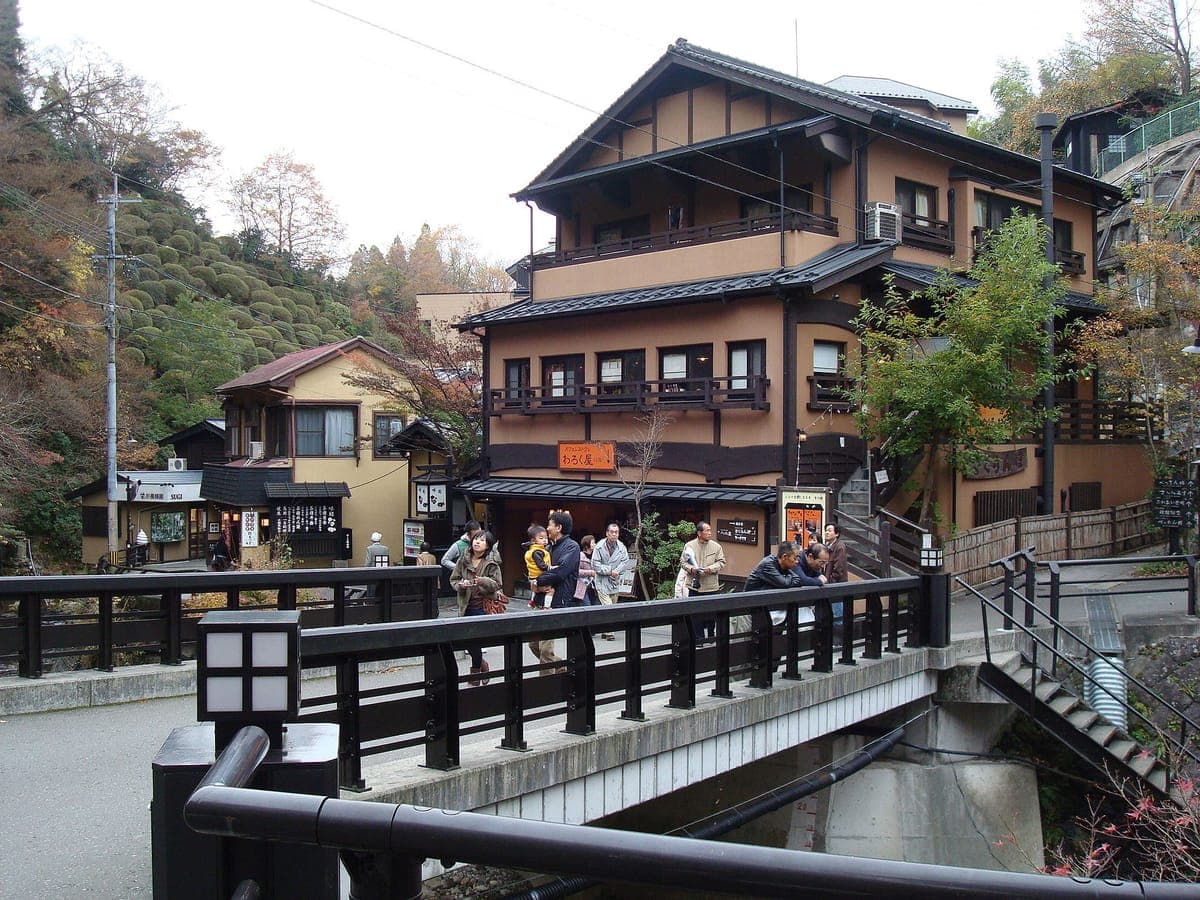
Tucked into the wooded mountains of Kumamoto, Kurokawa Onsen is the antidote to a resort strip: a tightly clustered village of traditional ryokan built along a river gorge, with wooden bridges, lantern-lit lanes, and a deliberate ban on the neon and concrete that overran other spa towns. Its signature is the rotenburo (open-air bath) culture — many inns open their outdoor pools to day visitors, so you can soak your way from one to the next surrounded by forest. It stays overlooked by travellers who default to Beppu or Hakone, which is exactly why it keeps its calm. Getting there: By bus from Kumamoto Station or by car, roughly a 2-hour drive; nearest stop is the Kurokawa Onsen bus center, 5–10 minutes' walk from the village. From Hakata Station it's about 1h 59m by car. Admission ¥1,500 (the 3-bath onsen-hopping pass; child ¥700). Best in autumn.
02Oitahidden gem
Yufuin backstreets
由布院
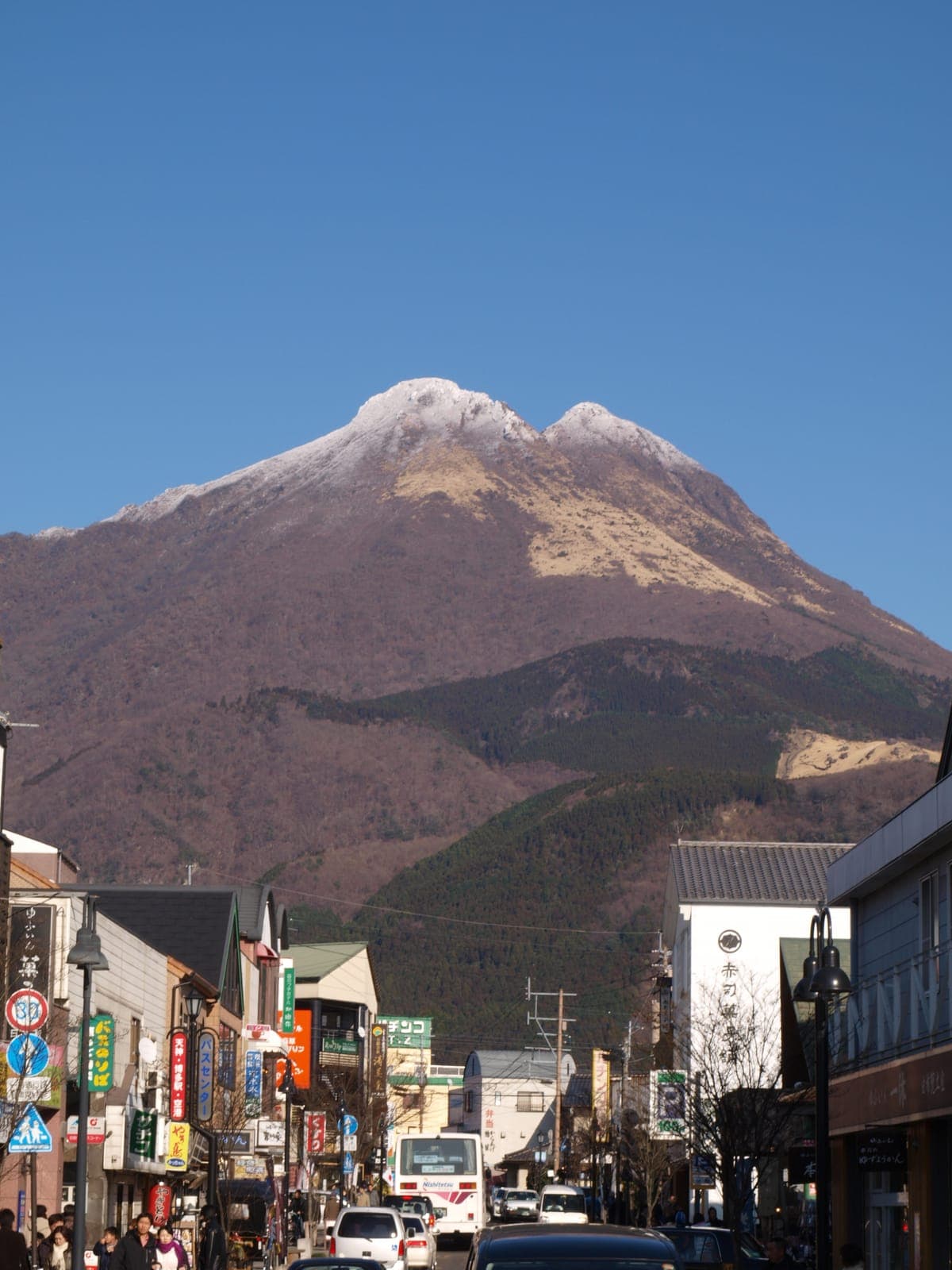
Everyone comes to Yufuin, but almost everyone stays on the crowded souvenir road between the station and the lake. Slip one block off it and the Yufuin backstreets open up — a network of narrow lanes lined with small art galleries, local crafts, and traditional ryokan, with Lake Kinrinko at the far end. Come early and the lake is wrapped in mist, the water fed by warm springs so it steams against the cool morning air, and the whole basin feels like it belongs to you. Getting there: From Fukuoka, take the JR limited express to Yufuin Station, then it's about a 10-minute walk into the backstreets. From Hakata Station it's roughly 1h 34m by car. Best in autumn.
03Oitahidden gem
Shitanyu Lakeside Open-Air Bath
下ん湯
If Yufuin has one bath worth planning around, it's Shitanyu — a rustic, thatched-roof public bathhouse sitting right on the shore of Lake Kinrin. Inside are two small mixed-gender pools paid for by honesty box, plus an open-air rear section that faces straight onto the lake and forest. It's one of the last old-style communal onsen still open to visitors in the town centre, a world away from the polished hotel spas nearby. There are no changing rooms and no frills — just steam, water, and the lake a few metres away. Getting there: About a 20–25 minute walk from Yufuin Station along Yunotsubo Kaido to the Lake Kinrin shore; bring your own towel and small change for the honesty-box fee. Open daily 10:00 AM – 8:00 PM. Best year-round, though cold-weather mornings pair beautifully with the lake's mist.
04Oitahidden gem
Beppu Beach Sand Bath (Shoningahama Sand SPA)
別府海浜砂湯(上人ヶ浜サンドスパ)
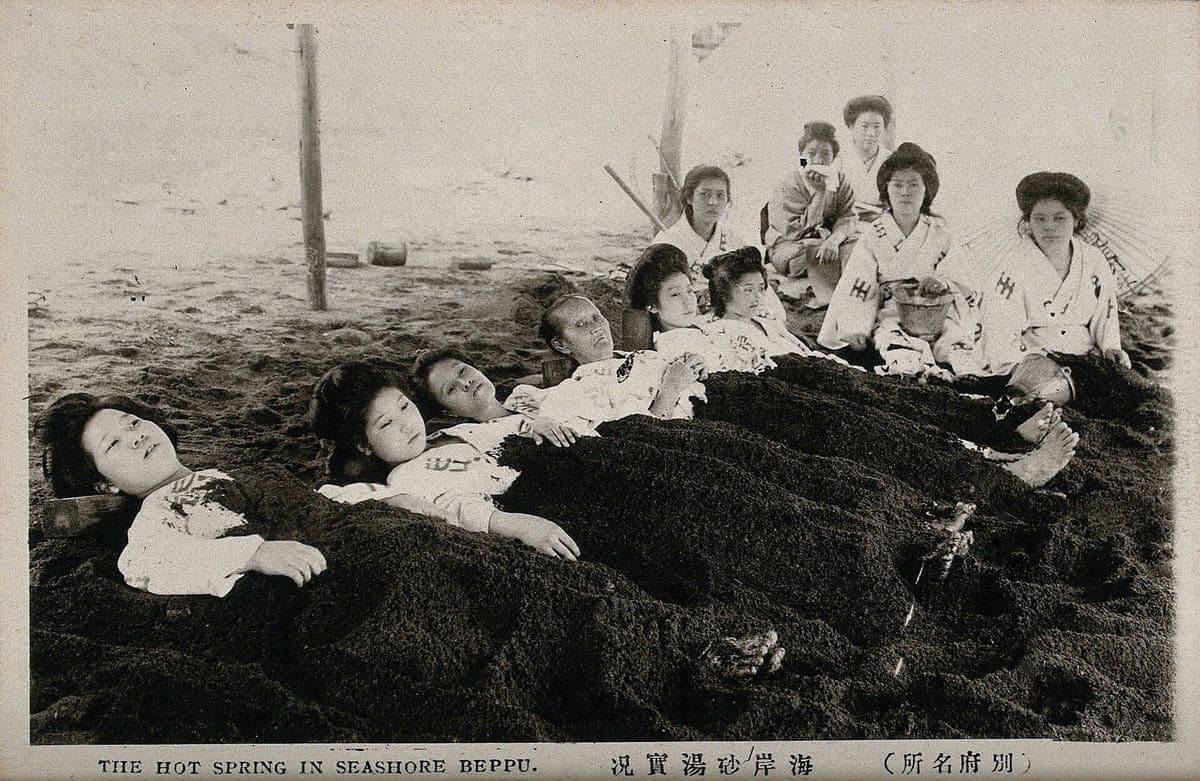
Beppu doesn't have to mean the packed hell circuit. On the Shoningahama waterfront within Shonin Park, this seaside sand-bath lets you lie on the beach while attendants bury you in naturally geothermal-heated sand, with Beppu Bay stretching out in front of you. It's the modern successor to the historic Beppu Kaihin Sunayu on the same site, and it's a completely different sensation from an ordinary tub — the warmth presses in from all sides while the sea breeze cools your face. A genuine coastal soak that most day-trippers to Beppu never find. Getting there: Kamenoi Bus from Beppu Station toward Shoningahama, roughly 20–25 minutes. Admission ¥2,500 (the sand bath is bundled with the grand bath; there's no standalone tier). Best year-round, and especially lovely at sunset.
05Oita
Chinoike Jigoku (Blood Pond Hell)
血の池地獄
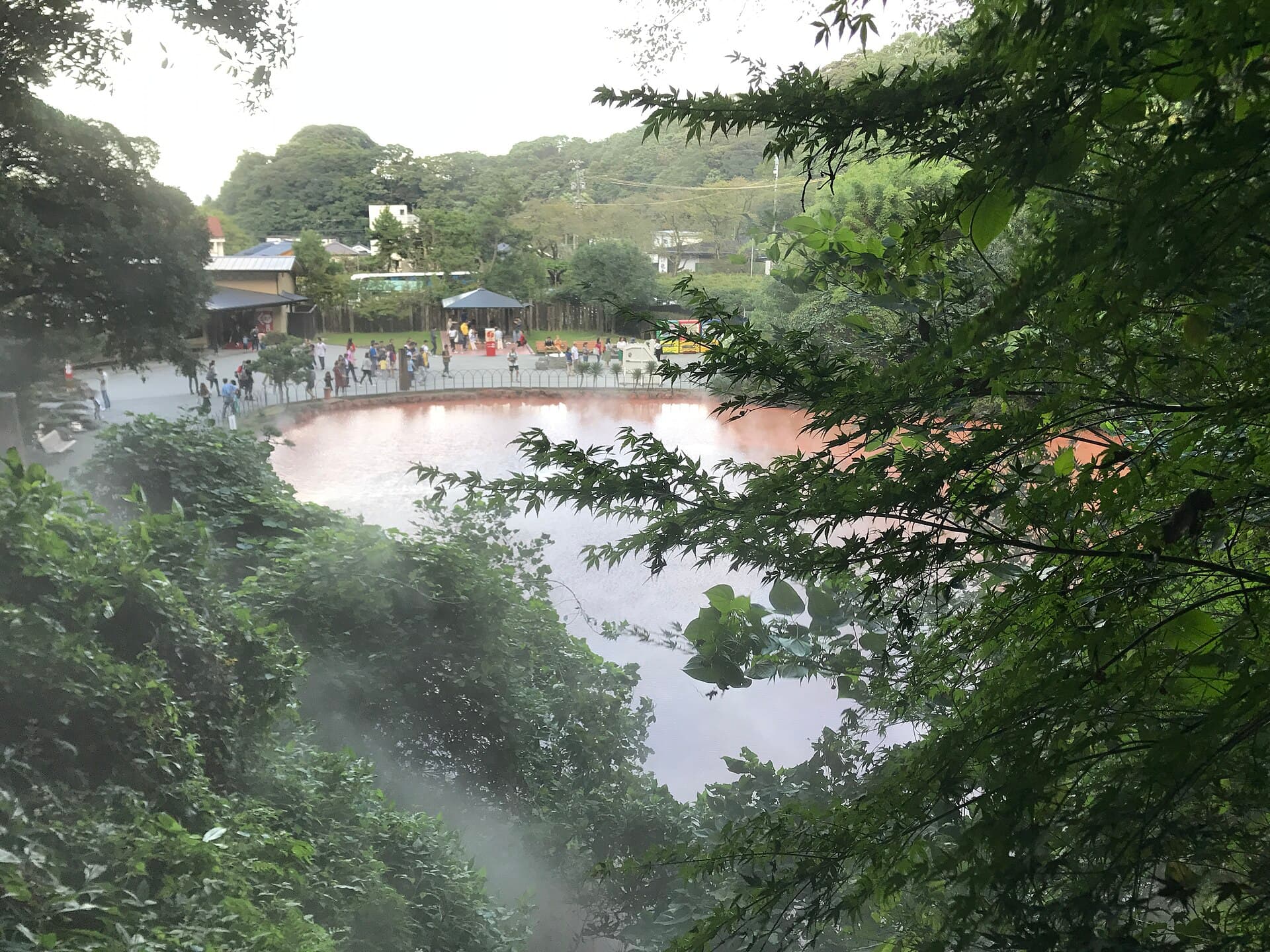
Beppu's "hells" (jigoku) are for looking, not bathing, but Chinoike Jigoku earns a detour away from the main cluster. Sitting in the Noda/Shibaseki district about 2km from the busy Kannawa hells, it's Japan's oldest natural hot-spring hell, with a documented history of more than 1,300 years. Its pond glows a vivid rust-red — the colour comes from iron oxide and clay minerals dissolved in the 78°C water — and being set apart from the crowds gives it a slower, eerier atmosphere than the packed central hells. Getting there: Reached by a short bus ride (route 16/16A, about 5 minutes) from the Kannawa hells cluster to the Chinoike Jigoku-mae stop; roughly 40 minutes by bus from Beppu Station. A combined ticket covers all seven Beppu hells. Open 8:00–17:00 daily. Best year-round.

06Nagasaki
Unzen Jigokudani
雲仙地獄
Cross into Nagasaki and the steam follows. Unzen Jigokudani — "Unzen Hell Valley" — is a geothermal field of bubbling sulfur springs and hissing steam vents high in the Unzen highlands, a living reminder of the volcanic activity that shaped the region, including the catastrophic 1792 eruption of Mount Unzen. Wooden walkways thread between the vents, and the resort town around it has been drawing bathers to its milky, sulphur-rich waters for generations. Because most Kyushu itineraries never leave the east coast, it stays refreshingly uncrowded. Getting there: From Nagasaki, take a train to Isahaya Station, then a bus up to Unzen; nearest rail is Azuma Station, about 12 minutes' walk from the wider area, though the valley itself is a bus ride into the highlands. From Hakata Station it's roughly 2h 5m by car. Open 24 hours. Best in spring and autumn for pleasant weather. More info.
Shimabara Peninsula
The Shimabara Peninsula is the wider world Unzen sits inside — a scenic thumb of land jutting into the sea below Nagasaki, ringed by coastline, layered with hot springs, and heavy with history from the 17th-century Shimabara Rebellion. Mount Unzen looms over it all, and spring water bubbles up in the towns at its feet. It's the kind of place mainstream travellers skip on their way to more famous Kyushu names, which leaves its coastal baths and old streets pleasantly quiet. Getting there: Accessible by train and bus from Nagasaki City, or by car via the Nagasaki Expressway; nearest station is Shimabaragaiko. From Hakata Station it's about 2h 46m by car. Best in spring and autumn.
07Oita
Sagiridai Observatory
狭霧台
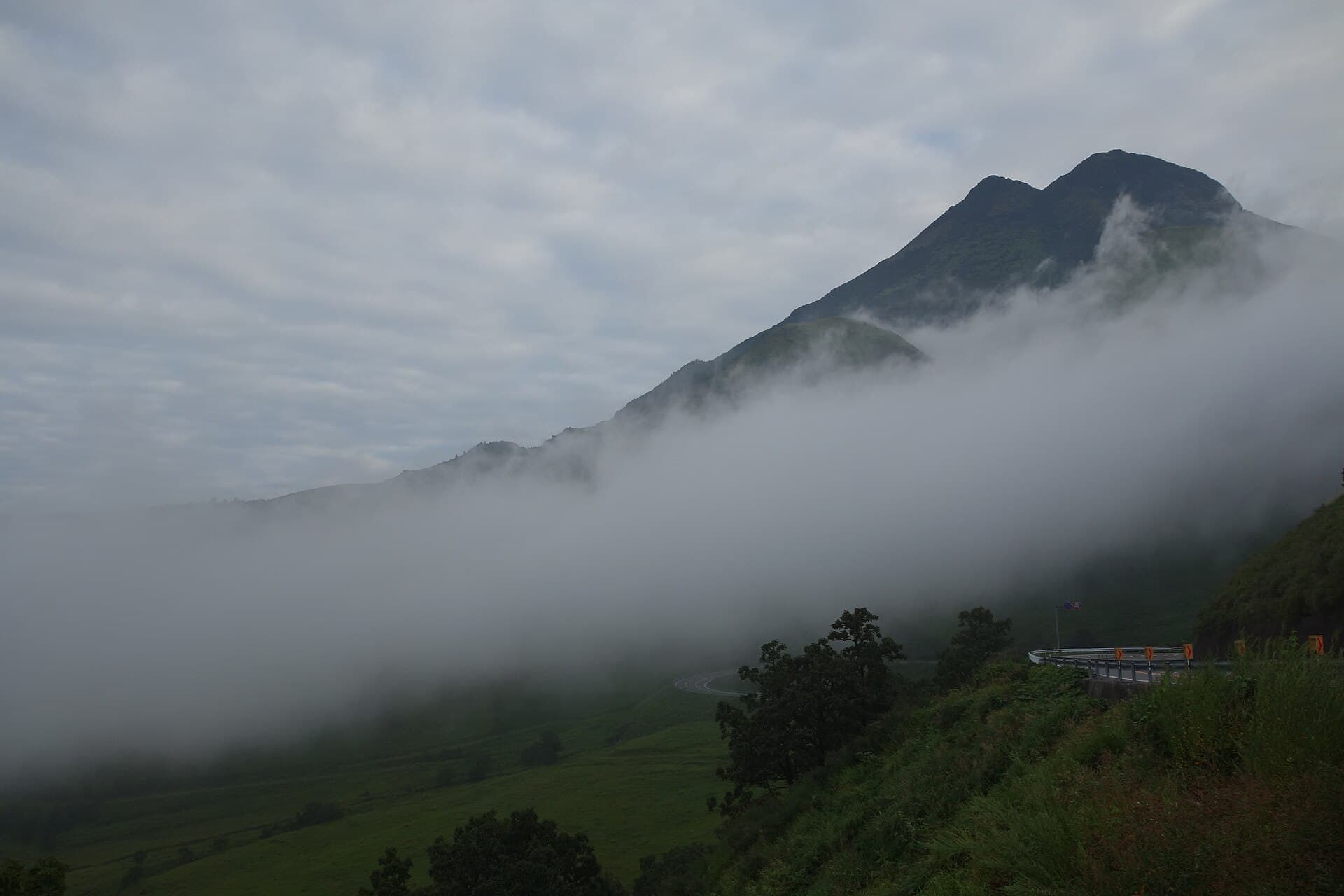
Not a bath, but the view that explains why people love these onsen mornings. Sagiridai is a free roadside viewpoint on the Yamanami Highway (Route 11) between Yufuin and Beppu, at about 680m elevation. Its name means "mist stand," and on clear, cold mornings the entire Yufuin basin below fills with fog — the same warm-spring steam and cool air that make the town so photogenic — visible in a single sweeping panorama. It's the classic Yufuin-basin shot, and it costs nothing but an early alarm. Getting there: About a 10–15 minute drive or taxi from Yufuin Station along Route 11 toward Beppu; there's a small shop and toilets, and no entrance fee. Open 24 hours. Best on autumn-to-winter mornings (roughly 7:00–9:00) for the mist, with clear basin views year-round.
When to go
These towns are genuinely year-round, but winter is when they turn magical. Cold mornings are what pull the mist off Lake Kinrin in Yufuin and flood the basin below Sagiridai with fog, and there's no better time to sit in an open-air bath like Shitanyu than when the air bites and the water steams. Autumn is the sweet spot for Kurokawa, whose forested gorge blazes with colour, and spring and autumn bring the mildest weather to Unzen and the Shimabara Peninsula, where the higher elevations can be cool. The Beppu sand bath and Chinoike Jigoku work in any season, with sunset especially good on the Shoningahama waterfront. If you can only pick one window, aim for a crisp late-autumn or winter stretch: fewer crowds, the deepest steam, and the reason "magical in winter" gets attached to Kyushu's hot springs in the first place.
Keep exploring
- Kagoshima & Miyazaki: Japan's Deep South →
- Nagasaki's Hidden Heritage →
- A First-Timer's 7-Day Hidden Japan Route →
- Hidden Winter Onsen — Snow-country soaks to pair with Kyushu's steam.
Ready to plan? Build your own hidden-Japan itinerary → — our trip generator turns any of these spots into a day-by-day route.