Multi8 min read
Hidden Japan With Kids: Family Travel Off the Beaten Path
Japan with kids off the beaten path — wild monkeys, a penguin parade, a buffalo-cart island, tub boats and workshops where children make udon and fake food.
Best time: Year-round
Let's be honest about what this guide is not. It is not a theme-park guide — no Disney, no Universal, no queueing system to optimise. It is a list of places on Japan's quieter side that genuinely work when you have children in tow: somewhere with an animal to meet, a boat to ride, a cave to walk into, or something a kid can make with their own hands and take home. That's the whole test we applied. A beautiful temple is not "great for kids" just because it's beautiful, so you won't find one here.
What you will find are ten places scattered from Hokkaido to the Yaeyamas, none of which are on the standard family-Japan circuit: a penguin parade beside a train station, a farm park where the animals are the ancestors of Kobe beef, an island you cross by water-buffalo cart, and a school where children stomp on udon dough with their feet. Most are cheap. Several are free. All of them buy you the thing every travelling parent is really shopping for — an afternoon where nobody is bored.
01Hokkaido
Noboribetsu Marine Park Nixe
登別マリンパークニクス
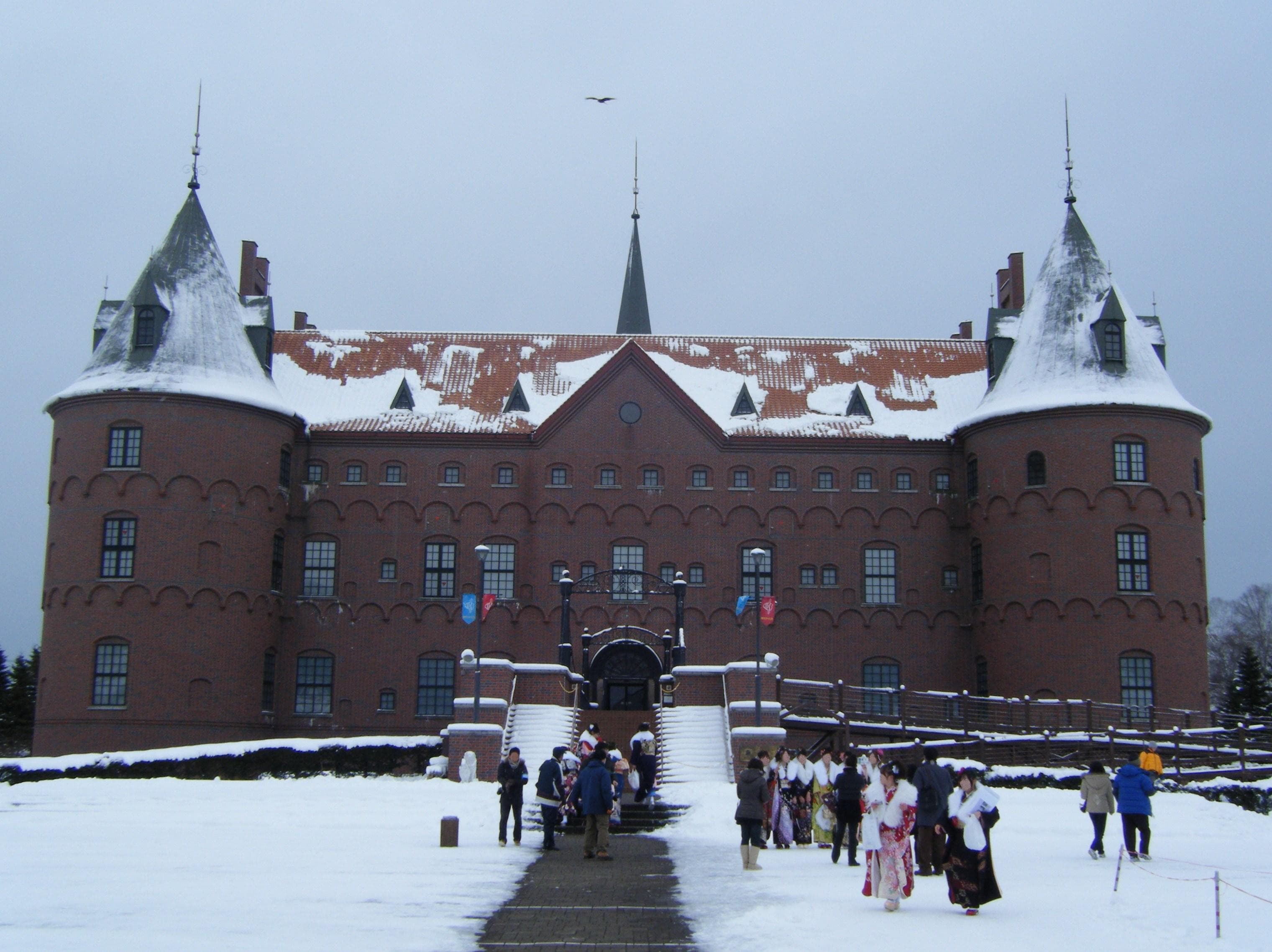
Everyone who goes to Noboribetsu goes for Hell Valley and the onsen, which is exactly why this Danish-castle-shaped aquarium gets treated as a rainy-day backup rather than the main event. It shouldn't be. Inside are sharks, seals and one of Hokkaido's largest fish collections — and the headline act is a troop of king penguins who take a daily "penguin parade" walk out among the visitors. For a family, its best feature might be the map: it sits a five-minute walk from the station, so there is no bus, no transfer and no negotiation.
Getting there: A 5-minute walk from JR Noboribetsu Station on the Muroran Main Line. Adult admission approximately ¥3,200 — check the official site for current pricing and combo tickets.
02Nagasaki
Nagasaki Penguin Aquarium
長崎ペンギン水族館
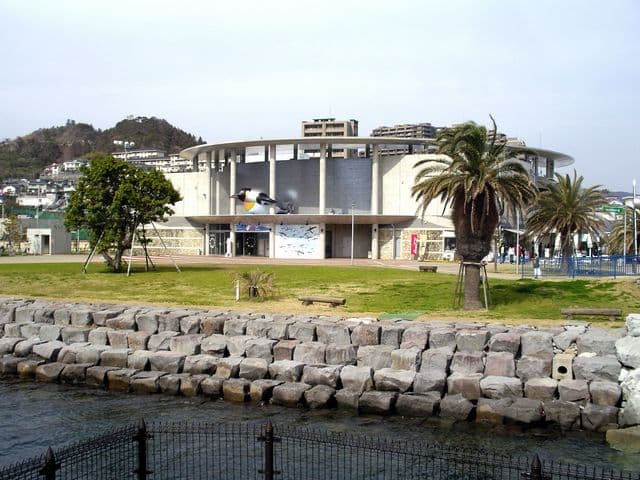
Nagasaki's tourism runs almost entirely on history — the harbour, the churches, the memorials — all of it important and almost none of it built for a seven-year-old. This aquarium is the release valve. It keeps a range of penguin species, and the visit is built around interaction: feeding sessions and hands-on experiences with the birds, alongside exhibits on marine conservation. It is small, it is cheap, and it does exactly one thing extremely well, which with children is usually the right number of things.
Getting there: Take a bus from Nagasaki Station to the Nagasaki Penguin Aquarium stop. Adult general admission ¥800.
03Kochi
Ashizuri Marine Aquarium SATOUMI
高知県立足摺海洋館SATOUMI
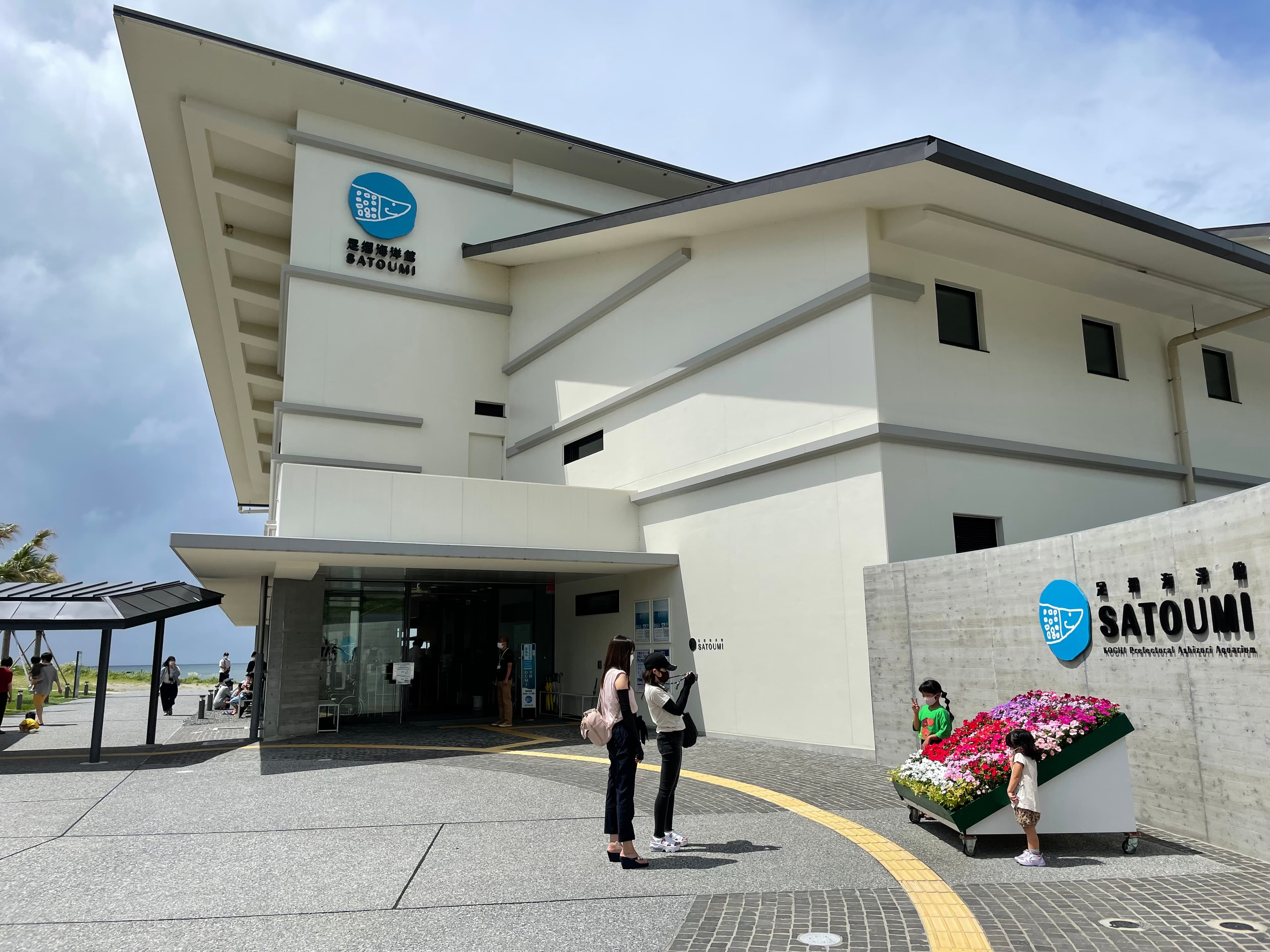
Deep in Kochi's far southwest, beside Ryugushi Bay near Tatsukushi, SATOUMI reopened in 2020 and displays around 350 species from the Kuroshio-warmed waters of Ashizuri-Uwakai National Park. It's a modern, well-designed aquarium that international visitors never reach because it is genuinely remote — which means you get the tanks more or less to yourselves. The pricing is unusually kind to families: children of elementary through high-school age pay half, and preschoolers get in free.
Getting there: About 90 minutes by bus from Nakamura Station to the SATOUMI-mae stop, or roughly 45–60 minutes by car. Adults ¥1,200; children (elementary–high school) ¥600; preschoolers free.
04Oita
Takasakiyama Natural Zoological Garden
高崎山自然動物園
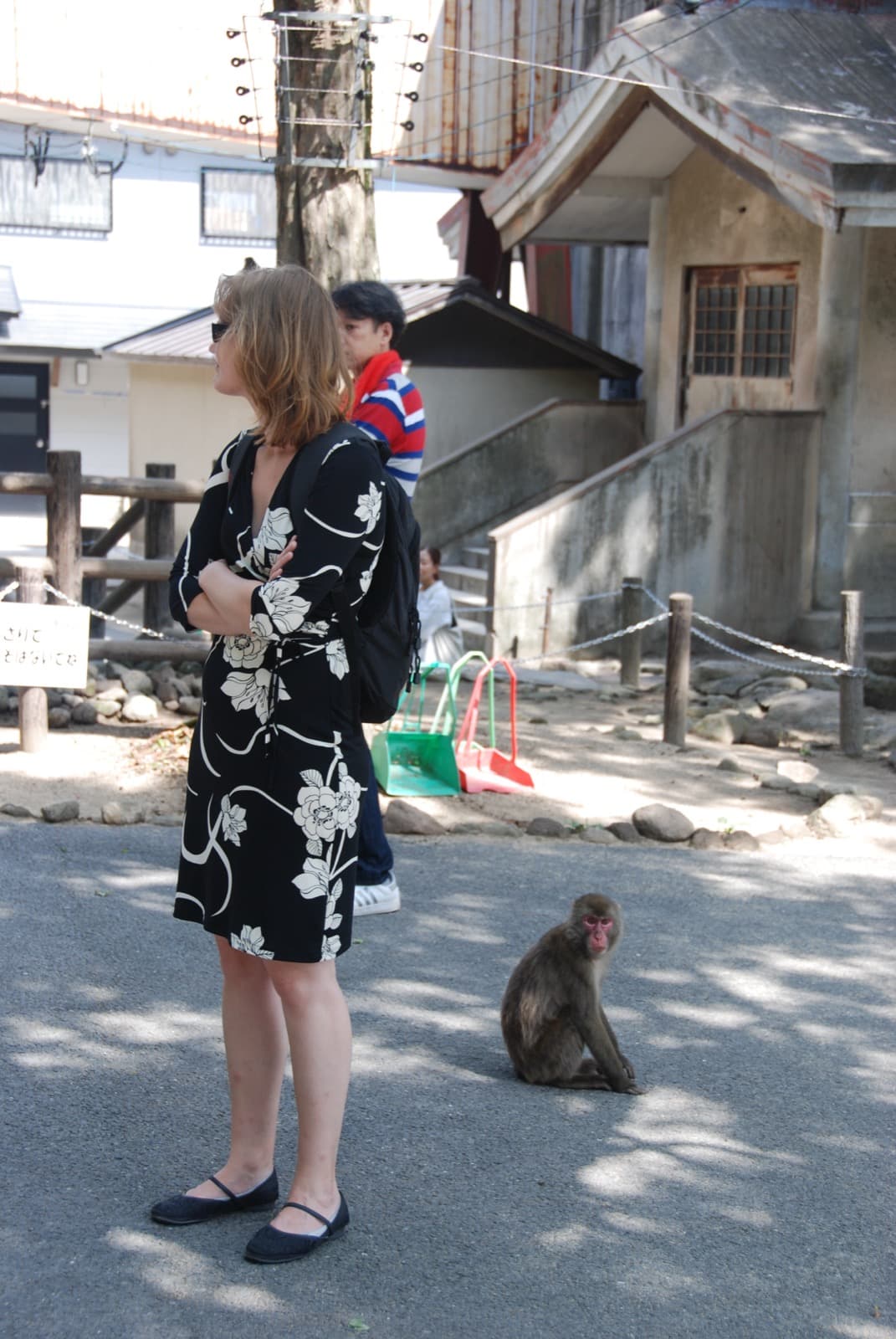
On the slopes between Ōita City and Beppu live around 1,500 free-ranging Japanese macaques, split into rival troops and viewable up close at scheduled feeding times. This is not a zoo in the enclosure sense — it's a wild-monkey sanctuary that has doubled as an ethological research site since the 1950s, and the monkeys move where they like. Time your visit to a feeding and the whole hillside comes alive at once. If you're already in Beppu for the onsen, it's a ten-minute bus ride away and the single best thing on the peninsula for children.
Getting there: Kamenoi Bus AS60/AS61 from Beppu Station (10 min, ~¥400), or a bus from Ōita Station (15–20 min, ~¥410), to the "Takasakiyama Shizen Dōbutsuen-mae" stop. Adult ¥520, child ¥260; the optional monorail is ¥110 round-trip. Last entry 4:30pm.
05Hyogohidden gem
Tajima Pasture Park
兵庫県立但馬牧場公園
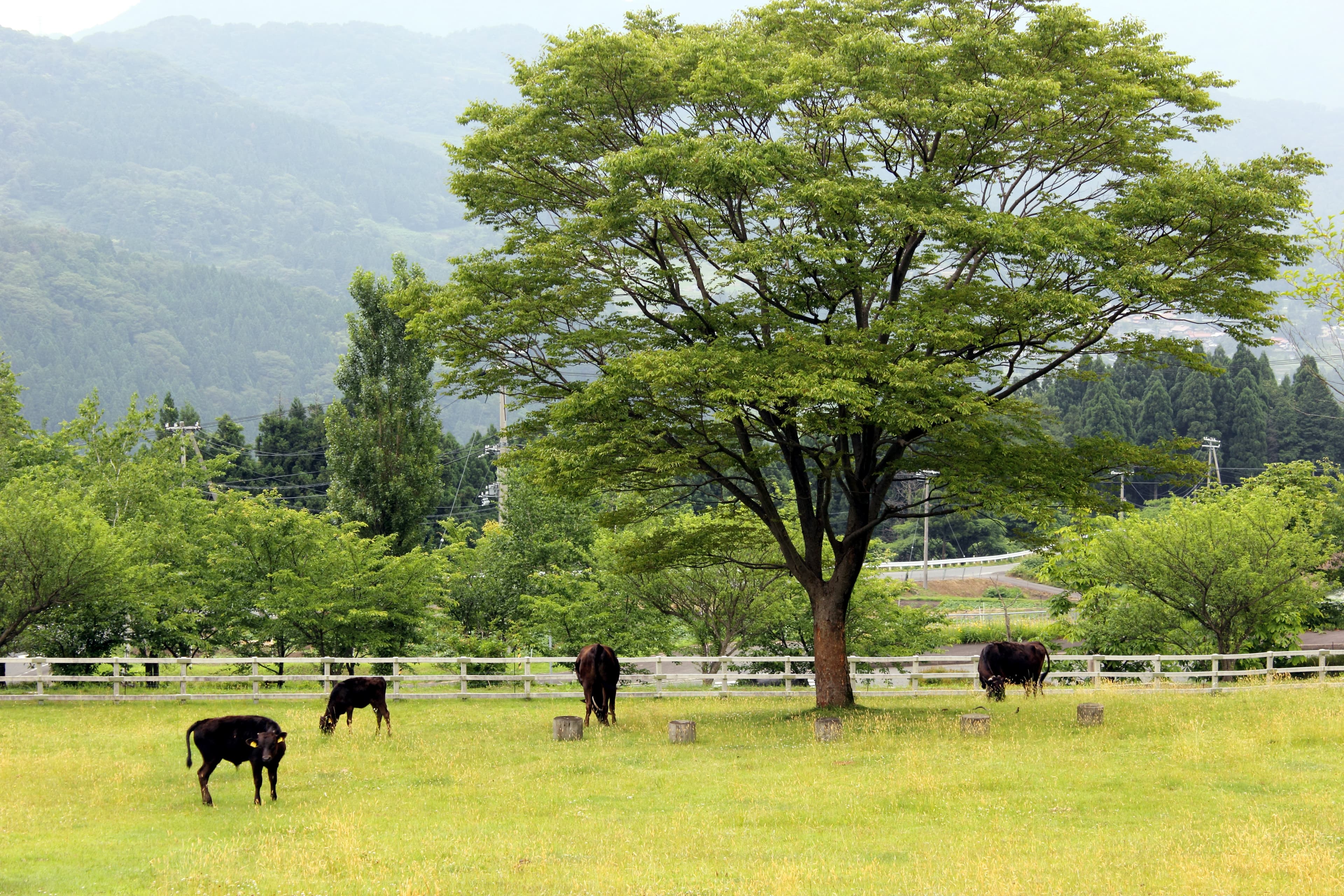
Rural Shin'onsen in Hyogo hides a prefectural pasture park where you can meet Tajima cattle — the breed behind Kobe beef — along with sheep and other farm animals. There's a Tajima Cattle Museum, hands-on farm activities, and a chairlift that carries you up to a mountaintop flower garden, which is the sort of thing that converts a "do we have to?" into a "can we go again?". It stays quiet outside weekends, and entry costs nothing, so it survives the classic family risk of a place being a bust after twenty minutes.
Getting there: From JR Hamasaka Station (JR San'in Main Line), take a town bus toward Yumura Onsen then a taxi, or take the bus to the Tatsuchi stop and walk about 15 minutes. Park entry and parking are free; the summit chairlift is ¥600 round-trip for adults. Closed Thursdays.
06Gifuhidden gem
Sample Village Iwasaki
さんぷるビレッジ・いわさき
Gujo Hachiman is the birthplace of Japan's fake-food industry — those uncannily realistic plastic dishes in every restaurant window — and this workshop, founded in 1932 by Takizo Iwasaki, is where you can make your own. Children pick a wax tempura, a lettuce leaf or a parfait and build it themselves, then carry it home as the best souvenir of the trip. It's the sort of oddball, locally-run experience that gets completely overshadowed by the town's castle and river, and it is one of the few workshops in this country that a child can genuinely complete unaided.
Getting there: About a 5-minute walk from Gujo-Hachiman Station, or 5 minutes by car from the Gujo-Hachiman IC. Entrance ¥300 adults / ¥200 students, including a keychain souvenir; hands-on workshop courses cost extra and require a reservation. Closed Tuesdays.
Nakano Udon School (Kotohira Campus)
Kagawa calls itself "Udon Prefecture" and this is the most established place to find out why. Over about 60 minutes a costumed instructor walks you through kneading, foot-stomping, rolling and cutting the dough — yes, children get to stamp on it — before a graduation ceremony hands out a diploma and a secret recipe booklet. You eat the udon you made, or take it home. It sits right on the omotesando approach road to Kompira-san, so it slots neatly into a day the grown-ups probably already planned.
Getting there: On the Kompira-san approach, about 870m / an 11-minute walk from Kotohira Konpira-san; nearest stations JR Kotohira or Kotoden Kotohira. Basic course ¥1,760 per person (tax incl.); the premium tasting course is ¥2,800.
07Niigatahidden gem
Tarai-bune Tub Boats
たらい舟
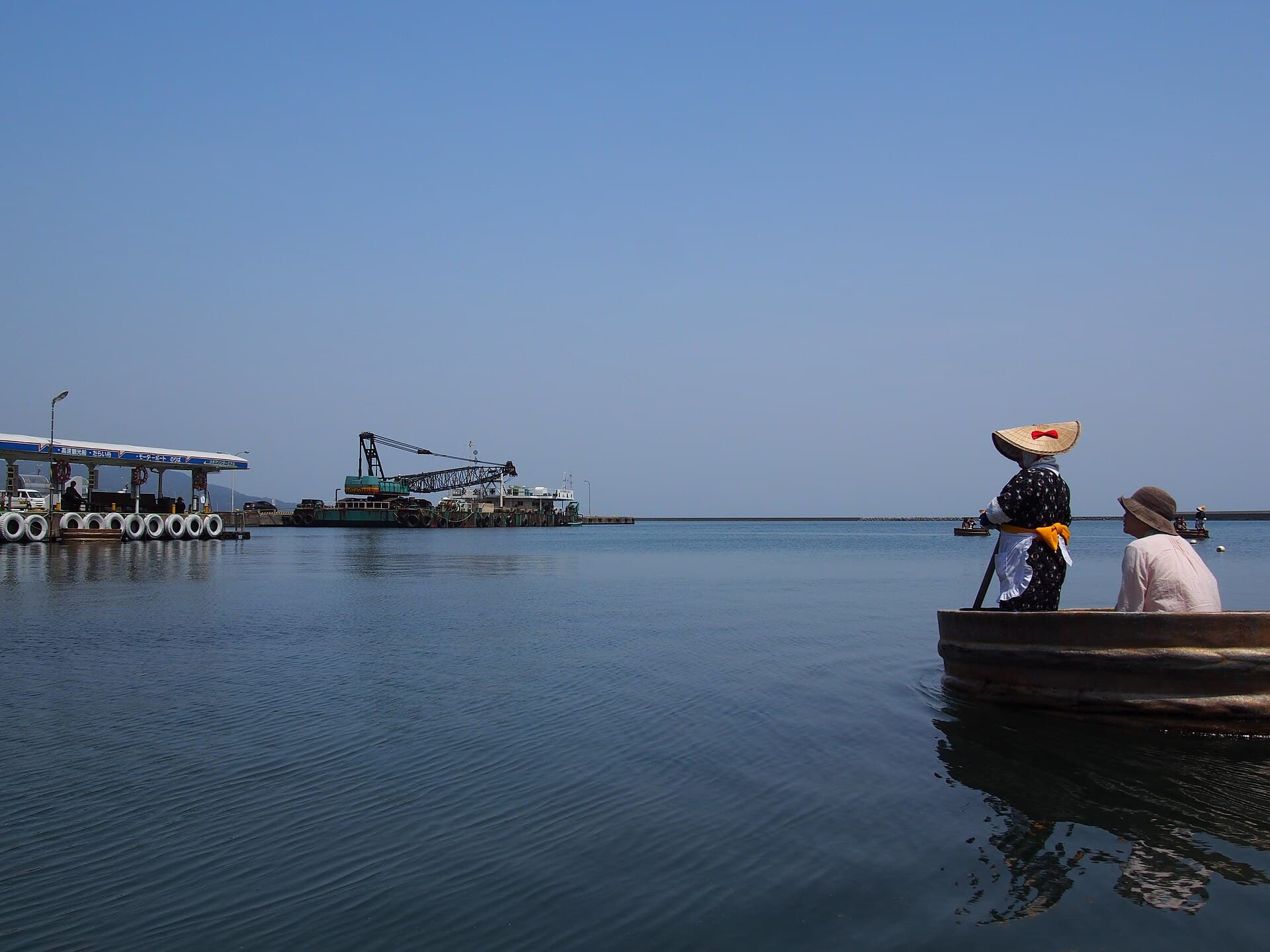
At Ogi on Sado Island, women in traditional dress hand-paddle round wooden washtubs through the rocky coves — a working method of gathering shellfish and seaweed that exists nowhere else in Japan. Kids get a short ride in one, and a boat shaped like a barrel is an easy sell at any age. The child fare is half price, the whole thing takes minutes rather than hours, and it is a much better anecdote for the school holidays than another castle.
Getting there: At Ogi Port on Sado Island — walkable from the port. Adult ride ¥1,000, child ¥500. Best in summer.
08Okinawahidden gem
Yubu Island
由布島
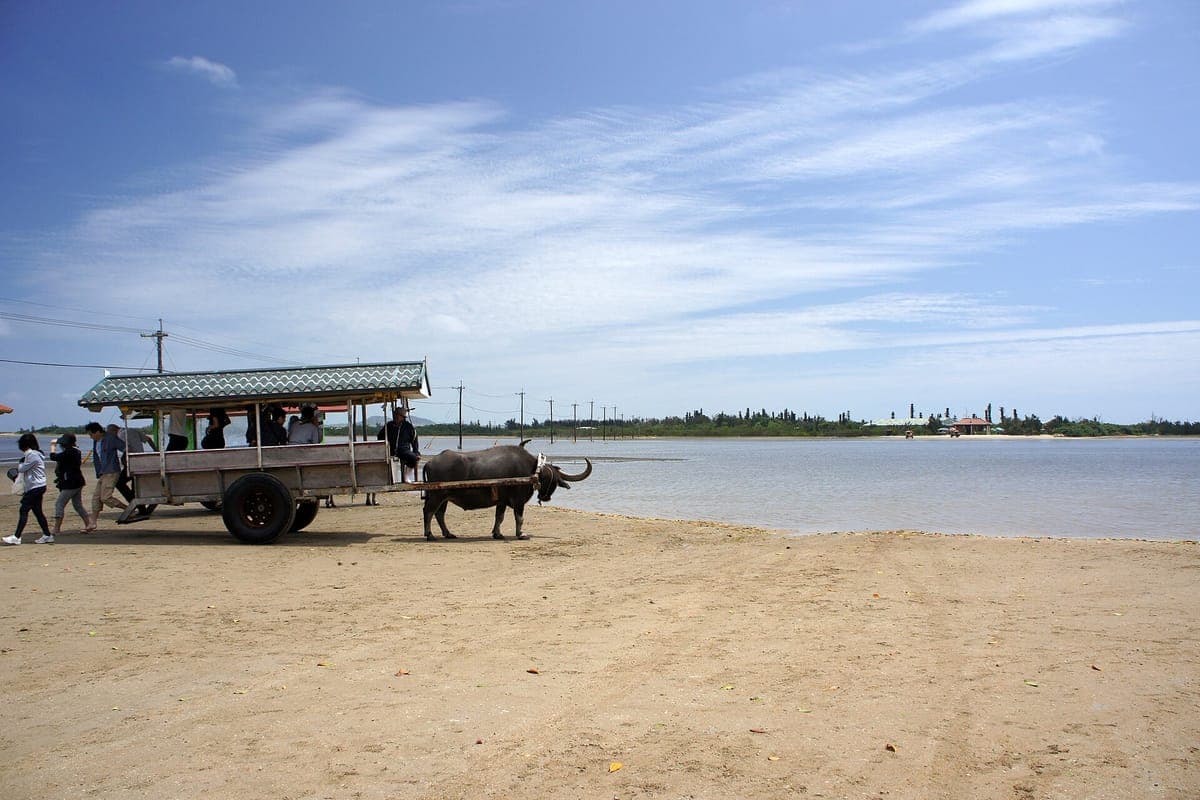
Off Iriomote's east coast lies a tiny botanical-garden islet you reach by riding a water-buffalo-drawn cart across a shallow lagoon at low tide. The crossing is the attraction: a slow, splashing, entirely unforgettable ten minutes that no child forgets, with a subtropical garden to wander at the far end. It's the sort of thing overseas visitors simply don't know exists, and it's the reason we made it this guide's cover image.
Getting there: About a 20-minute bus ride from Ohara Port on Iriomote, which is reached by ferry from Ishigaki. The buffalo-cart and garden bundle is ¥2,000 for adults, ¥1,000 for children.
09Nagano
Togakushi Ninja Village
戸隠忍法資料館・からくり屋敷
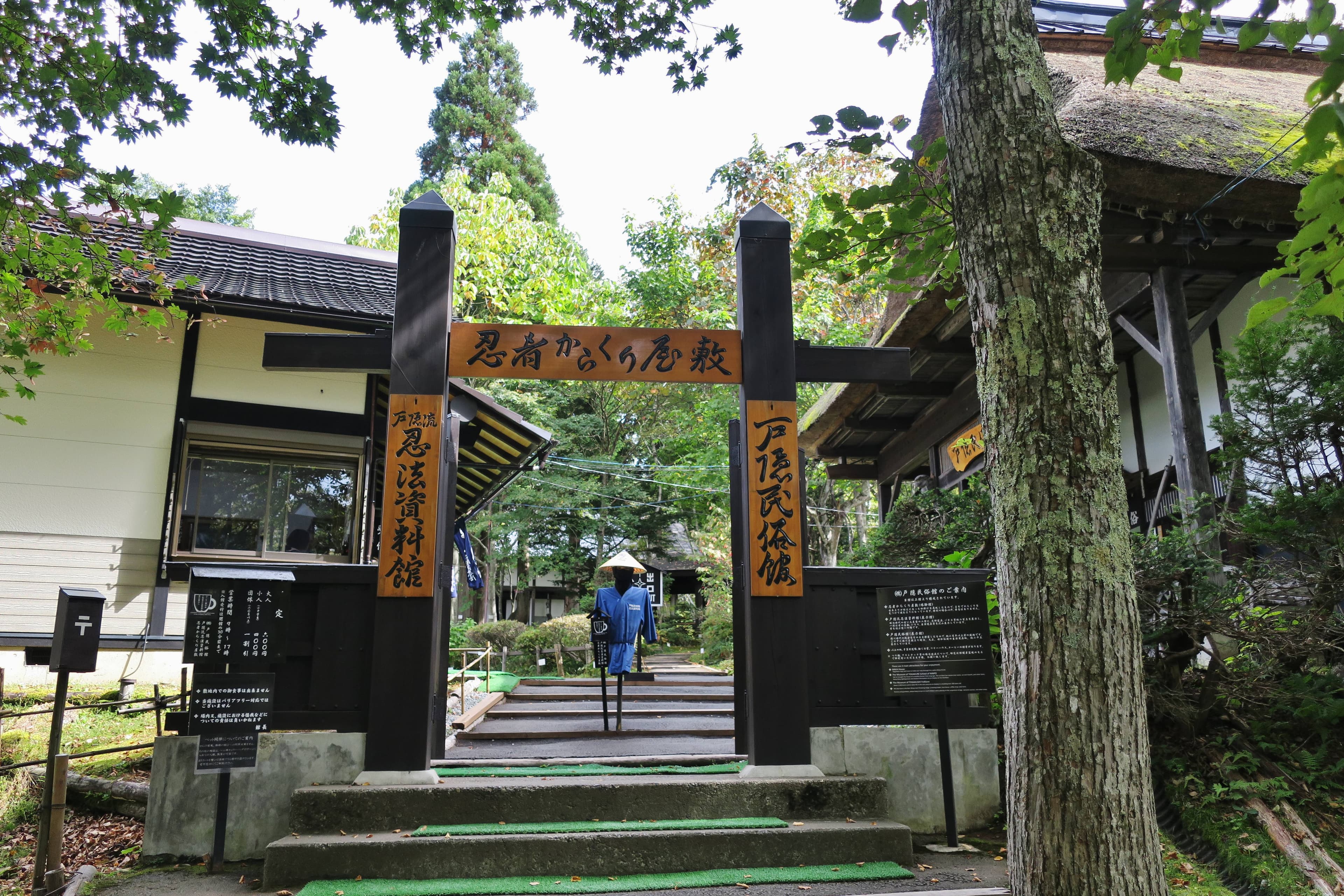
Most visitors bus up to Togakushi for the shrine's cedar avenue and walk straight past this unpretentious, locally-run complex next to the Okusha approach. Inside are a folk museum, a ninjutsu history museum, and — the part your children have already decided is the best thing in Japan — a trick house full of hidden doors and traps. It's tied to Togakushi's real history as a ninjutsu training ground, so it's not pure invention, and the ticket prices tell you exactly who it's built for.
Getting there: From the Nagano Station bus terminal, take the Togakushi-bound bus (~55–70 min) to the Okusha-iriguchi stop. ¥700 adults / ¥500 elementary–middle school / ¥200 young children. Seasonal — roughly late April to mid-November. Closed Thursdays.
Planning a family trip around these
Two practical rules make this list work. First, watch the closing days: Tajima Pasture Park and Togakushi Ninja Village close on Thursdays and Sample Village Iwasaki closes on Tuesdays, which is exactly the kind of detail that ruins a day when you've driven two hours with tired children. Second, respect the bus timetables. Several of these — Takasakiyama, Tajima, Togakushi, SATOUMI — are reached by local bus, and rural services thin out sharply in the afternoon. Check the last return before you commit.
Season matters less than you'd think. The aquariums are indoor, all-weather and rainproof, which makes them the right pick for a bad-weather day anywhere in the country. Tarai-bune is at its best in summer, Togakushi Ninja Village runs roughly late April to mid-November only, and the buffalo cart at Yubu depends on the tide rather than the calendar. If you want to build one long trip rather than a set of day trips, pair the workshops in Gifu and Kagawa with the aquariums, and let the animals be the reward at the end of each travel day.
Keep exploring
- Japan's Secret Islands: Gotō, Yakushima, Amami & Sado — the wider island trip that Sado's tub boats belong to.
- Japan's Far South: A Yaeyama & Miyako Islands Guide — how to reach Iriomote and Yubu Island.
- Into the Japan Alps: Nagano, Gifu & Toyama — links Togakushi and Gujo Hachiman into one route.
- Shikoku's Slow Road: Valleys, Pilgrims & the Inland Sea — the udon school sits right on this circuit.
Ready to plan? Build your own hidden-Japan itinerary → — our trip generator turns any of these spots into a day-by-day route.