Shikoku6 min read
Shikoku's Slow Road: Valleys, Pilgrims & the Inland Sea
A Shikoku off the beaten path itinerary across all four prefectures — Iya valleys, the Shimanto River, Uwakai terraces, pilgrim temples and Inland Sea coast.
Best time: Spring & autumn
Shikoku is Japan's least-visited main island, and that is exactly its gift. Skip the bullet-train reflexes here: the reward for going slow is a landscape of steep river valleys, terraced citrus coast, unmanned seaside stations and pilgrim temples that international travelers almost never reach. This Shikoku off the beaten path itinerary threads all four prefectures — from the depopulated hamlets of Tokushima's Iya country, down to Kochi's free-flowing Shimanto River, across Ehime's Uwakai coast and gorges, and up into Kagawa's Inland Sea plains where the 88-temple pilgrimage tradition began. Most of these stops need a car and a willingness to detour off the highway, and that is precisely why the crowds never arrive. Below are eight places that reward the slow road, each with the practical details you need to actually get there.
01Tokushima
Nagoro Scarecrow Village
名頃かかし村
Deep in the mountains of Tokushima, Nagoro is a village where hundreds of hand-made scarecrows are scattered through the lanes and fields — many built to represent former residents who have died or moved away, including a whole classroom of "pupils." The installation is a quiet, moving response to rural depopulation, and its remoteness and total lack of tourist infrastructure keep mainstream travelers away.
Getting there: Take a bus from Awa-Ikeda Station to Nagoro, then walk about 15 minutes to the village; from Takamatsu Station it is roughly 2h 40m by car. Free. Open year-round.
02Kochihidden gem
Kochi Shimanto River
高知四万十川
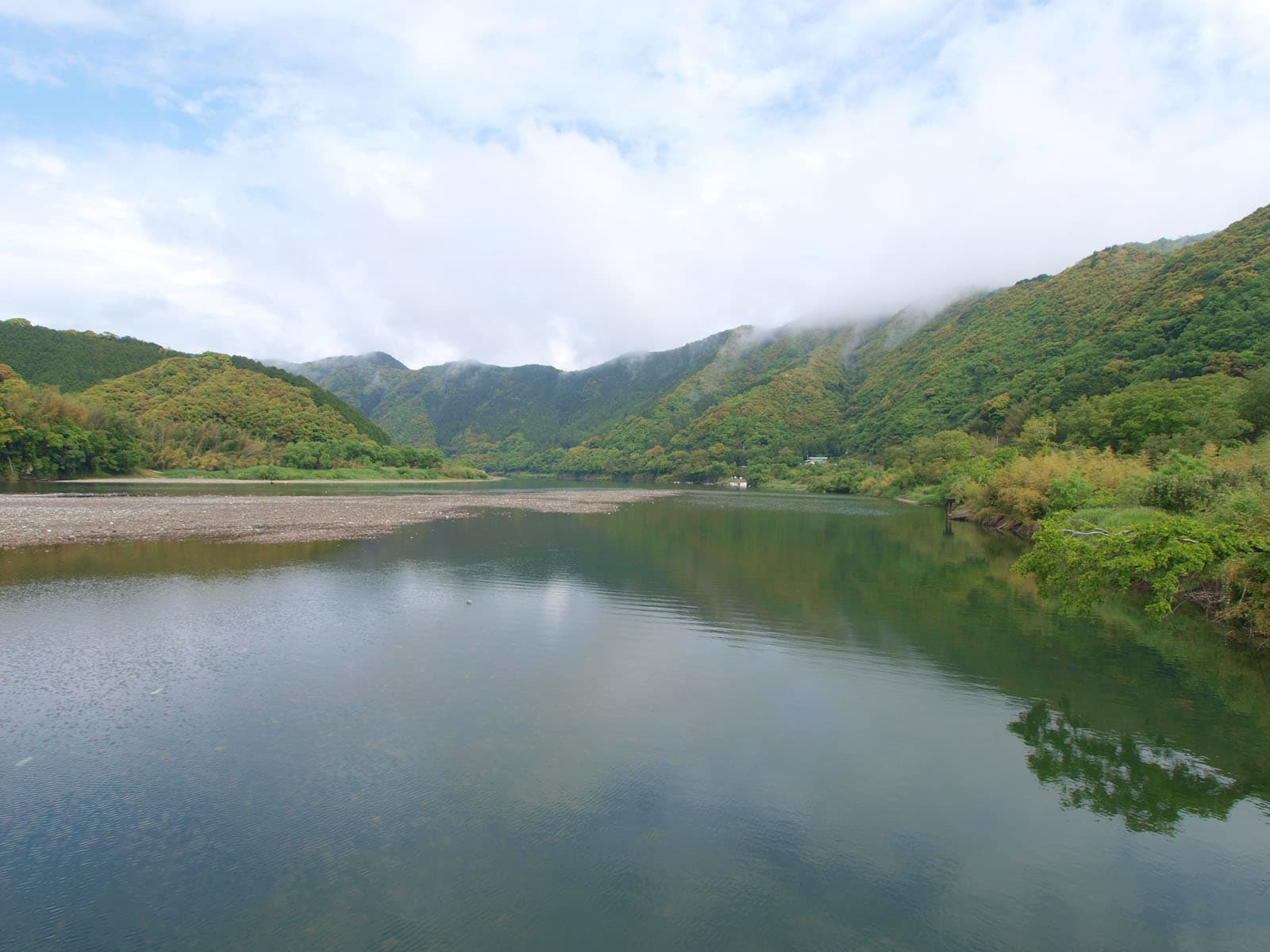
The Shimanto is renowned as Japan's last major free-flowing river — no big dams — and its clear water and tranquil banks feel like a Japan from decades ago. Visitors canoe its pristine reaches and eat the local delicacy of ayu sweetfish grilled whole over an open flame. It stays serene largely because travelers gravitate to more commercialized attractions elsewhere.
Getting there: From Kochi City, take a train to Nakamura Station, then a local bus to the river; the nearest platform is Tosa-Taisho Station, about a 19-minute walk. From Takamatsu Station it is roughly 3h 9m by car. Best in spring and autumn for mild weather and foliage.
03Kochihidden gem
Yusuhara Cloud Village
ユスハラ雲の村
High in a cedar town in western Kochi, Yusuhara Cloud Village is a hotel designed by architect Kengo Kuma, where clouds regularly roll in to wrap the timber buildings in mist. It is a striking blend of contemporary architecture and mountain nature, overlooked by most travelers simply because of how far it sits from the usual tourist spots.
Getting there: Approximately 2 hours by car from Kochi City; from Takamatsu Station it is roughly 3h 6m by car. Best in autumn for the foliage.

04Ehimehidden gem
Karihama Terraced Fields
狩浜の段畑
On Ehime's Uwakai coast, generations of farmers in this fishing hamlet stacked white limestone into steep terraces to grow citrus on slopes too vertical for anything else — a striped landscape of stone, sea and mikan groves. In 2019 the whole hamlet and its adjacent waters were designated a nationally Important Cultural Landscape for the way terraces, village and sea still work together. It is the least-trafficked of several similar hamlets along this coast; no tour buses stop here.
Getting there: By car only, along coastal Route 378 between Yawatahama and Uwajima; the nearest hub is JR Yawatahama Station, about 40 minutes away. A signed walking course loops through the terraces in about 50 minutes — remember these are working farms. Best late February to March for rapeseed and mikan blossom, or November to January for ripe citrus color.

05Ehime
Shimonada Station
下灘駅
An unmanned JR Yosan Line platform in Iyo City that sits directly against the Iyo-nada sea, with no barrier between the platform and the water — trains stop just feet from the shoreline. It is nationally famous among photographers and filmmakers for its sunsets, yet remains almost unknown to foreign visitors because it is a working rural stop rather than a paid attraction.
Getting there: Roughly 50 minutes from Matsuyama by train on the Yosan Line toward Uwajima/Iyo-Ozu, or about 30 minutes by car via the Matsuyama Expressway Iyo IC. Free public platform, but parking is very limited (around 5 spaces) and fills on weekends and at sunset.
06Ehimehidden gem
Nametoko Gorge
滑床渓谷
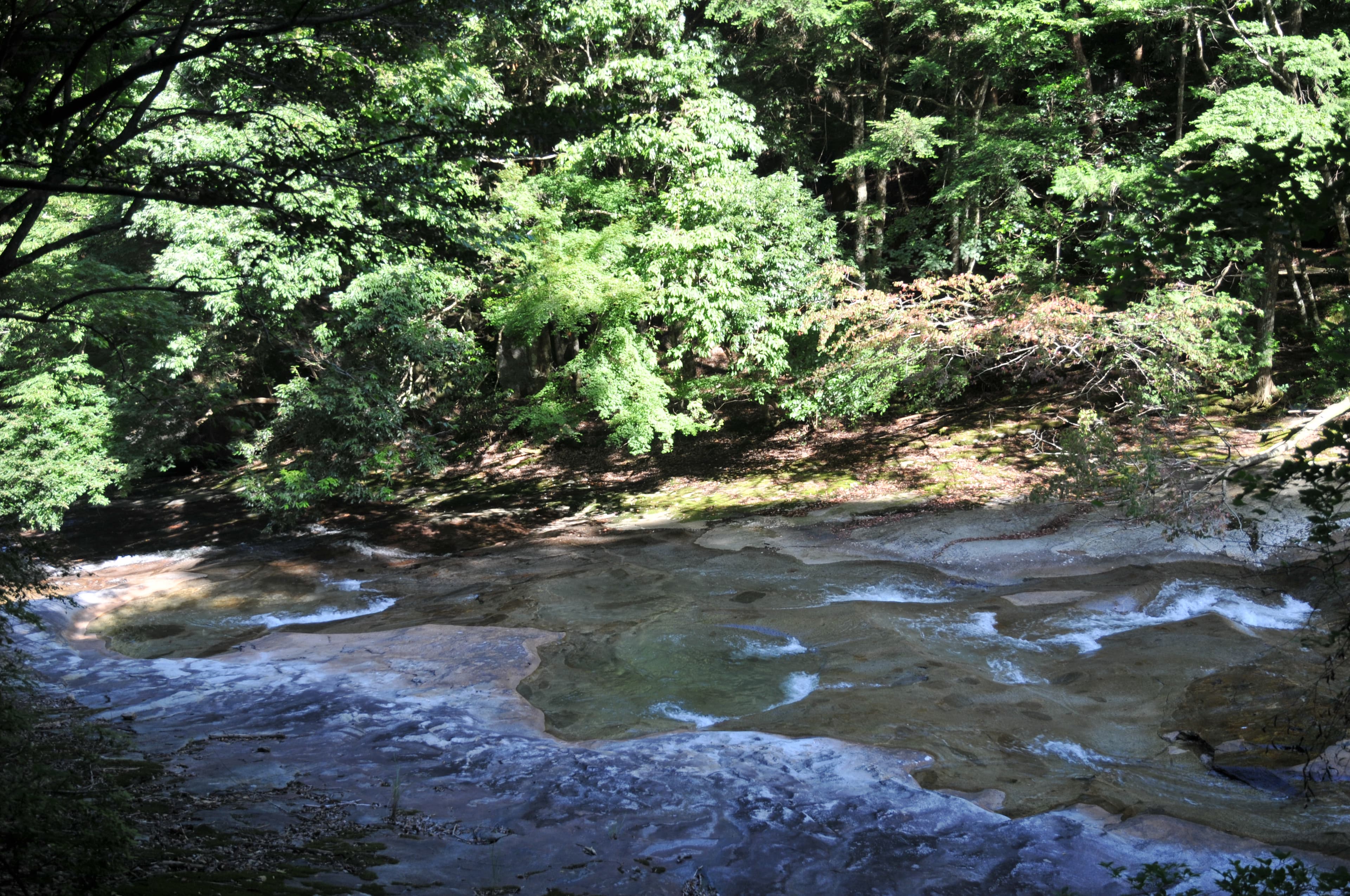
A 12km granite gorge along the upper Meguro River — a Shimanto tributary — inside Ashizuri-Uwakai National Park, known for its smooth, slide-like eroded riverbeds and clear emerald pools. Its signature sight is Yukiwa-no-taki, an 80m waterfall sliding down a single granite slab and ranked among Japan's Top 100 Waterfalls. It stays quiet because it is car-only and roughly an hour from the nearest city, Uwajima — genuine remoteness, not manufactured obscurity.
Getting there: No public transit reaches the gorge; a car is required. It is about 20-35 minutes from JR Matsumaru Station via Route 381 (narrow, with some unguarded sections), around 30 minutes from Uwajima-Asahi IC, or about 90 minutes from Matsuyama. Reaching the waterfall is roughly a one-hour mountain walk from the trailhead. Free entry, with free parking at the Mannenso visitor center.

07Kagawa
Zentsuji Temple
総本山善通寺
The birthplace of Kobo Daishi (Kukai), founder of Shingon Buddhism, and Temple 75 of the Shikoku 88-temple pilgrimage — one of only three sites in Japan, alongside Koyasan and Kyoto's To-ji, considered central to his life. The vast grounds split into an Eastern Precinct with a five-storied pagoda and a Western Precinct marking his actual birth site, shaded by camphor trees said to predate him. Despite outranking Kotohira's Konpira-san in religious significance, it draws a fraction of the crowds because it sits inland, off the main Takamatsu-Naoshima corridor.
Getting there: A 20-minute walk or 5-minute taxi from JR Zentsuji Station on the Dosan Line; about 15 minutes by car from the Marugame-Zentsuji IC on the Takamatsu Expressway. Best in spring for cherry blossoms in the Eastern Precinct, or in autumn for foliage.
08Kagawa
Shodoshima Olive Park
小豆島オリーブ公園
On Shodoshima in the Seto Inland Sea, this hillside park pairs a Greek-style windmill with olive groves and sweeping sea views, plus tastings of the island's somen noodles and a much-loved connection to the film My Neighbor Totoro. Most travelers skip Shodoshima for more famous destinations and miss its easy blend of culture and coast.
Getting there: Take a ferry from Takamatsu to Shodoshima, then a local bus to the park; from Takamatsu Station the drive is roughly 1h 42m including the crossing. Free entry (the on-site onsen is a separate charge). Best in spring.
When to go
Spring and autumn are the sweet spots across all four prefectures. Spring brings cherry blossoms to Zentsuji's Eastern Precinct, mild hiking weather in the valleys, and the best of Shodoshima's olive-park greenery, while late February and March light up the Karihama terraces with rapeseed and mikan blossom. Autumn delivers foliage over the Shimanto and Yusuhara's cedar hills, ripe citrus color glowing on the Uwakai terraces from November into January, and long, clear evenings at Shimonada Station. The seaside and river stops — Shimonada, the Shimanto, Nagoro — are pleasant year-round, but the shoulder seasons give you the mildest weather for the long, winding drives this route demands. Wherever you go, build in extra time: nearly everything here rewards lingering rather than rushing.
Keep exploring
- Japan's Secret Islands — more far-flung, slow-travel island escapes across the country.
- San'in Coast: Shimane & Tottori — another quiet, under-visited stretch of Honshu's backroads.
- Autumn Leaves Off the Beaten Path — where to catch foliage without the crowds.
- Setouchi: Art Islands & Port Towns — Hop the Inland Sea to the art islands off Shikoku's north coast.
- Hidden Japan With Kids — udon schools, tub boats and buffalo carts.
Ready to plan? Build your own hidden-Japan itinerary → — our trip generator turns any of these spots into a day-by-day route.