Tohoku9 min read
Tohoku's Samurai Towns: Bukeyashiki, Castles & Jokamachi in the North
A north-to-south route through Tohoku's samurai towns — Kakunodate's bukeyashiki, Hirosaki, Kubota, Aoba and Tsuruga castles, and the jokamachi around them.
Best time: Year-round (best: late April cherry blossom, October foliage)
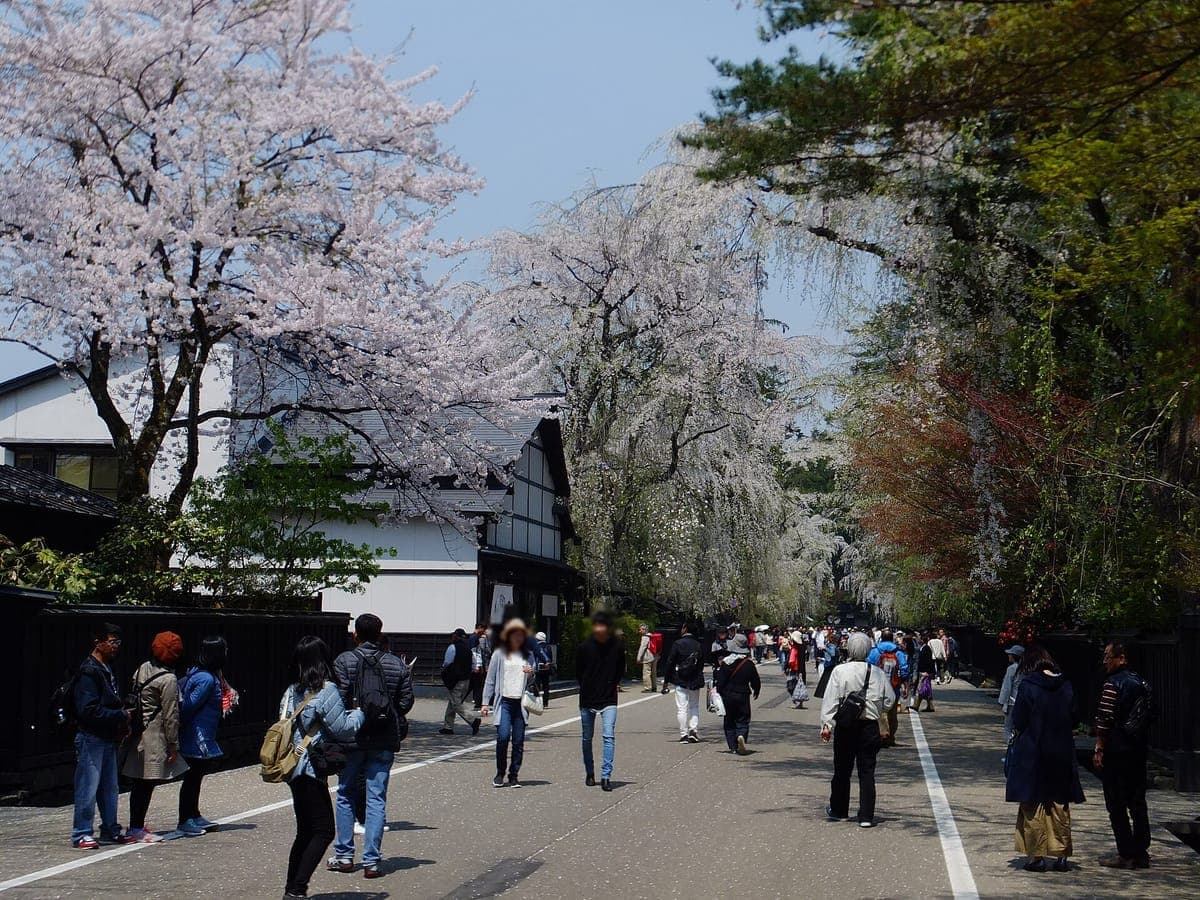
Japan's samurai story is usually told in the west — Kyoto, Himeji, the great tourist keeps. But the north kept the physical evidence. Tohoku's six prefectures are strung together by jokamachi, the towns that grew in a castle's shadow, and by bukeyashiki — the walled quarters where the retainer class actually lived. Some of these towns still have their black wooden gates and hedged lanes. Others have only ramparts, a moat and a park, but they are the ramparts of the Date, the Satake, the Mogami and the Aizu, and the streets around them still bend to a plan a warlord drew four centuries ago.
Almost none of it is crowded. This route runs north to south, from Aomori's cherry-tree castle down through Akita's preserved samurai district and Iwate's brewing alleys to the Sendai of Date Masamune and, finally, to Aizu-Wakamatsu, where the samurai era ended in a siege. It is a rail-friendly line: Shinkansen spine, local branches, a lot of walking. For the national picture, see our companion guide to Japan's castle towns nobody visits — this one goes deep on the north.
01Aomori
Hirosaki Castle (Aomori)
弘前城
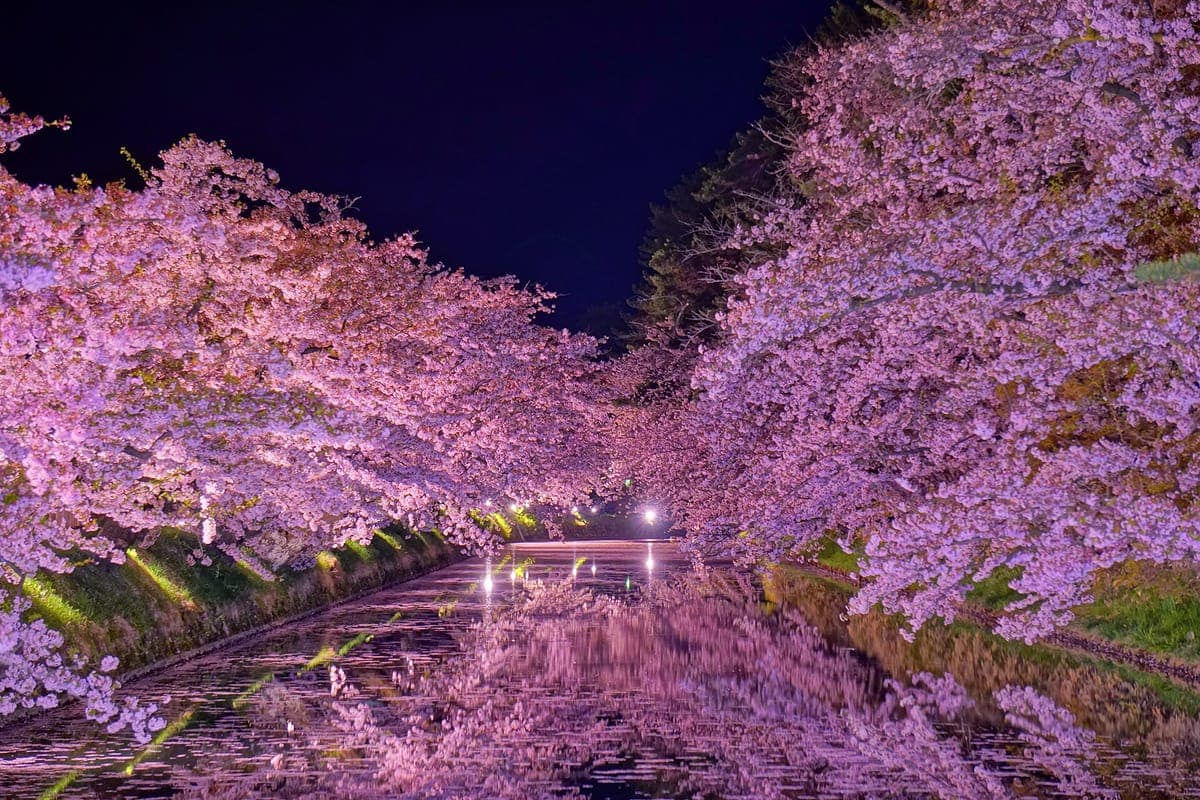
Start at the top of Honshu. Hirosaki Castle is the north's great castle park: historic architecture set in grounds that fill with cherry blossoms every spring, and a keep most travellers have never heard of because they compared their options to Himeji and stopped reading. That is the whole opportunity here — genuinely popular in blossom week, genuinely calm the rest of the year, with spring the season the site itself names as its best. Note that the tenshu (main keep) is currently closed for renovation; the paid-area ticket still buys you the inner grounds, walls and moats, which is where the atmosphere lives anyway.
Getting there: Take a train to Hirosaki Station, then a bus or taxi to the castle; the nearest stop is Chuohirosaki Station, about a 25-minute walk. From Sendai Station it is roughly 4h 14m by car. Admission ¥320 (paid-area ticket; keep closed for renovation). Open 9:00 AM – 5:00 PM daily.
02Iwate
Morioka Castle Ruins / Iwate Park (Iwate)
盛岡城跡(岩手公園)
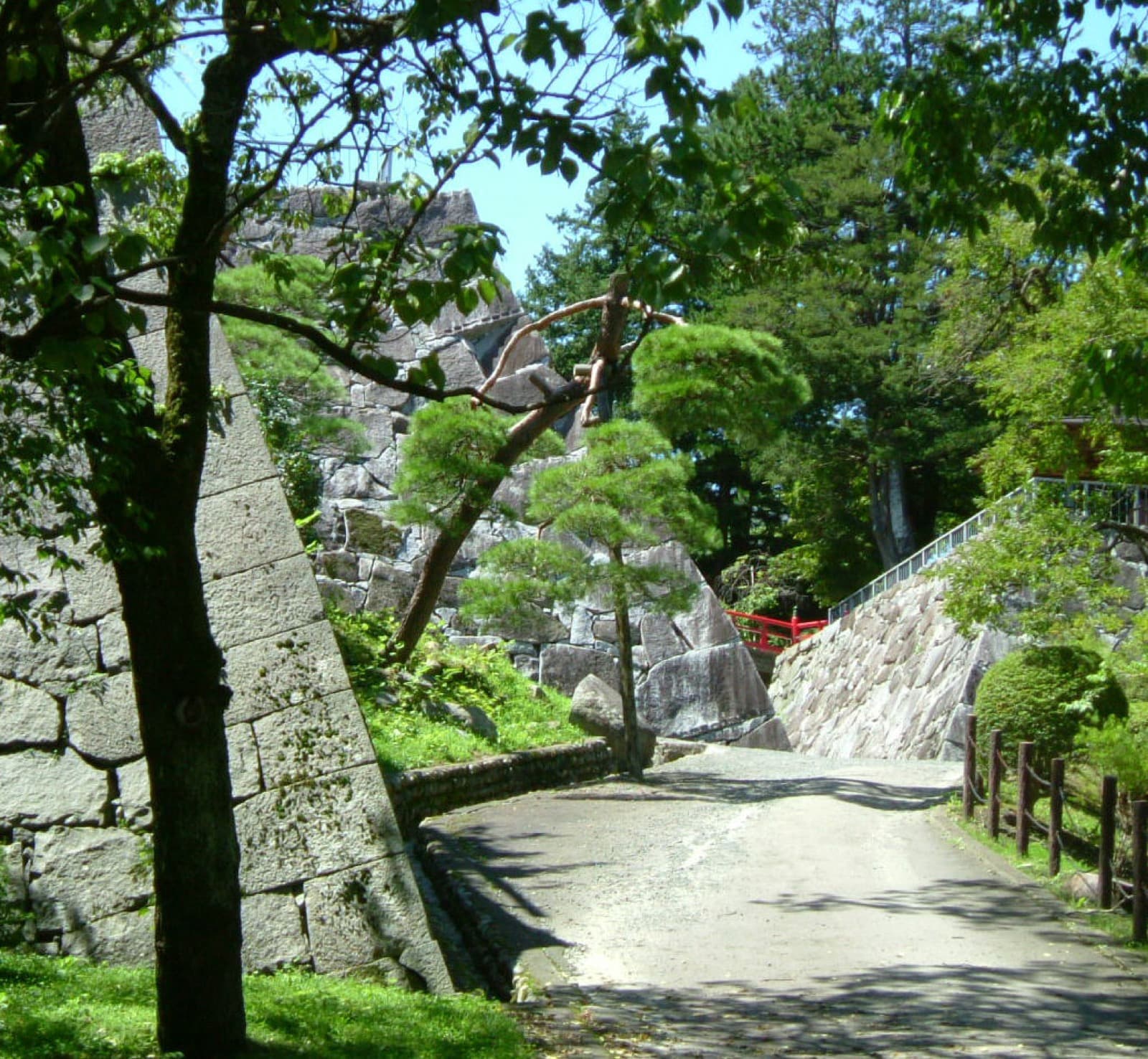
Morioka's castle has been a National Historic Site since 1937, and what survives is stone: ramparts and a moat wrapped around a public park in the middle of the city. There is no keep to climb. What there is instead is the bones of a castle town you can still read — the walls hold the centre of Morioka together, and the modern city grew around them rather than over them. Because Tohoku's more famous castles absorb all the attention, you will usually have the ramparts to yourself.
Getting there: Central Morioka, walkable from the city centre. The park is open 24 hours and there is no admission for the ruins.
03Iwate
Morioka Konyacho (Iwate)
紺屋町
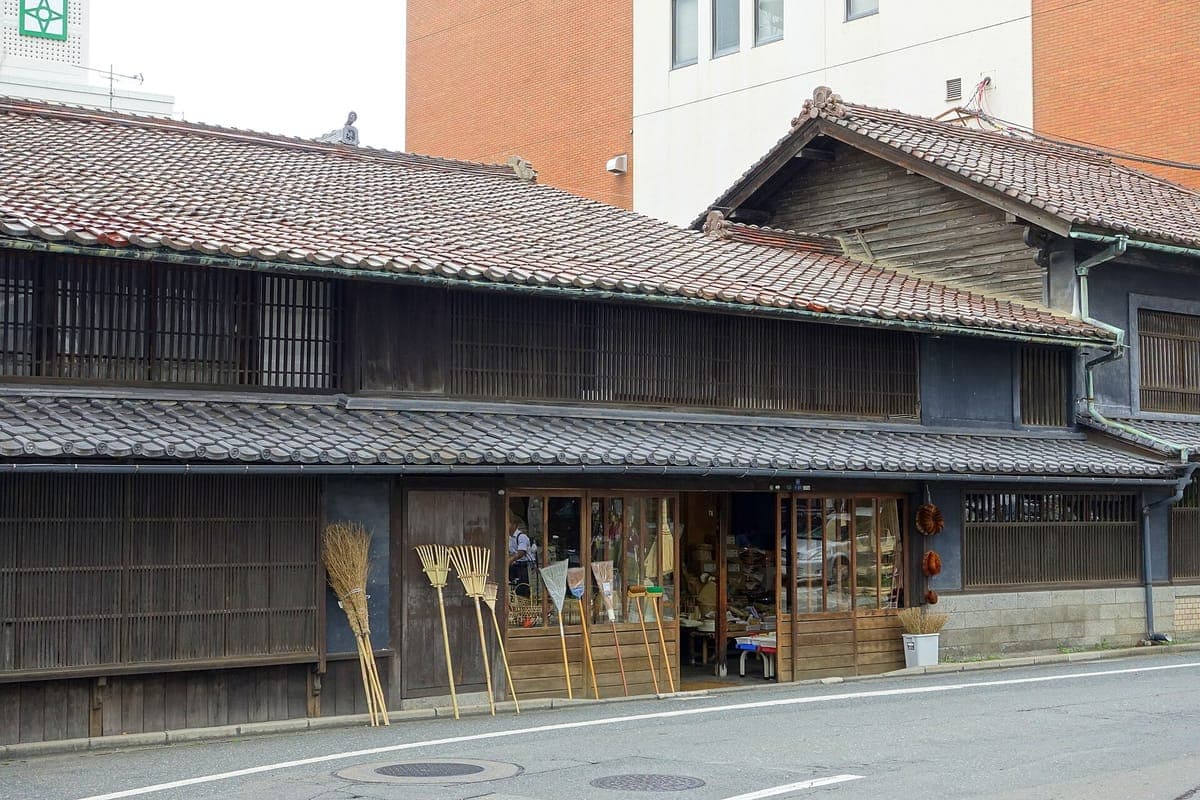
The castle gives you the plan; Konyacho gives you the life that filled it. This is an old alley in Morioka lined with craft sake breweries and traditional miso shops, with Nanbu ironware — a local craft going back centuries — sold nearby. Walking it is the clearest surviving sense of what a northern castle town's merchant and artisan quarter smelled and sounded like: fermentation, iron, wood. Most travellers skip Morioka entirely on their way north, which is why an alley this good is still a working neighbourhood rather than a heritage set.
Getting there: A short walk from Morioka Station; the nearest listed station is Kami-Morioka, about a 20-minute walk. From Sendai Station it is around 2h 29m by car. The streets are open 24 hours and free to walk.
04Akita
Senshu Park — Kubota Castle Ruins (Akita)
千秋公園(久保田城跡)
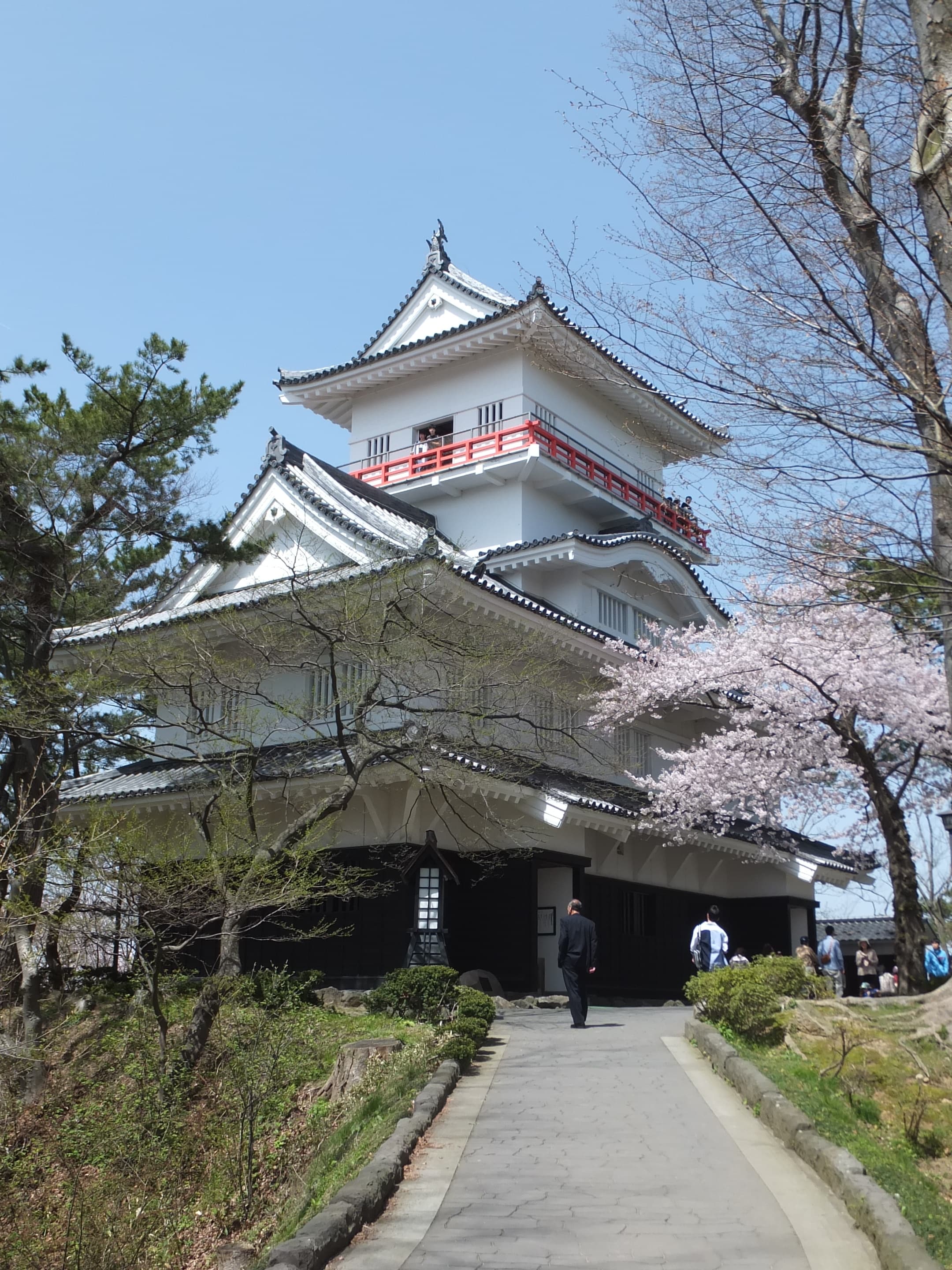
Cross to the Sea of Japan side. Senshu Park is 16.29 hectares in the middle of Akita City, on the site of Kubota Castle, seat of the Satake clan from 1602 to 1869. The reconstructed Osumi-yagura corner turret is the landmark, but the detail worth finding is the Omonogashira Goban-sho guardhouse — the only surviving Edo-period building on the site. Add the Satake Historical Museum, the moats and roughly 700 cherry trees, and Akita's defining historic landmark sits ten minutes from the Shinkansen, routinely walked past.
Getting there: About a 10-minute walk west from Akita Station's west exit along Hirokoji. Park entry is free; the Osumi-yagura turret museum charges ¥150 for adults (9:00–16:30). Park hours 9:00 AM – 4:30 PM.
05Akita
Kakunodate Bukeyashiki (Akita)
角館武家屋敷
This is the one. Kakunodate is the reason this route exists: a district of well-preserved samurai houses behind dark wooden walls, with weeping cherry trees leaning over the lanes and bursting into bloom in spring. It is a direct look at feudal Japan — traditional architecture, deep hedges, quiet streets — and it draws history and garden people in roughly equal measure. Yet mainstream itineraries still route around it towards Kyoto and Tokyo, which means that outside blossom week you can walk the bukeyashiki lanes in near-silence. Come in spring if you can; come any time if you can't.
Getting there: Kakunodate Station is a 2-minute walk from the district. From Akita City, the Shinkansen reaches Kakunodate in about 30 minutes; from Sendai Station it is roughly 3h 14m by car. The streets are open 24 hours (individual houses keep their own hours). Best in spring, during cherry blossom season.
Yokote Castle & Yokote Park (Akita)
Yokote's keep is a 1965 concrete replica on the hill where the original castle stood — honest about what it is, and worth the climb anyway. Inside is a small local history museum; on the fourth floor an observation deck opens over the whole Yokote Basin, which is the real payoff. Most people know Yokote only for the Kamakura snow-hut festival held partly in this same park each February, and never realise the castle hill is open — and scenic — the other eleven months. Autumn on the basin is the quiet alternative to the winter crowds.
Getting there: About a 20-minute walk uphill from JR Yokote Station through Yokote Park. Open 9:00 AM – 4:30 PM. Best in February (Kamakura Festival) or in autumn foliage.
06Yamagata
Kajo Park — Yamagata Castle Ruins (Yamagata)
霞城公園(山形城跡)
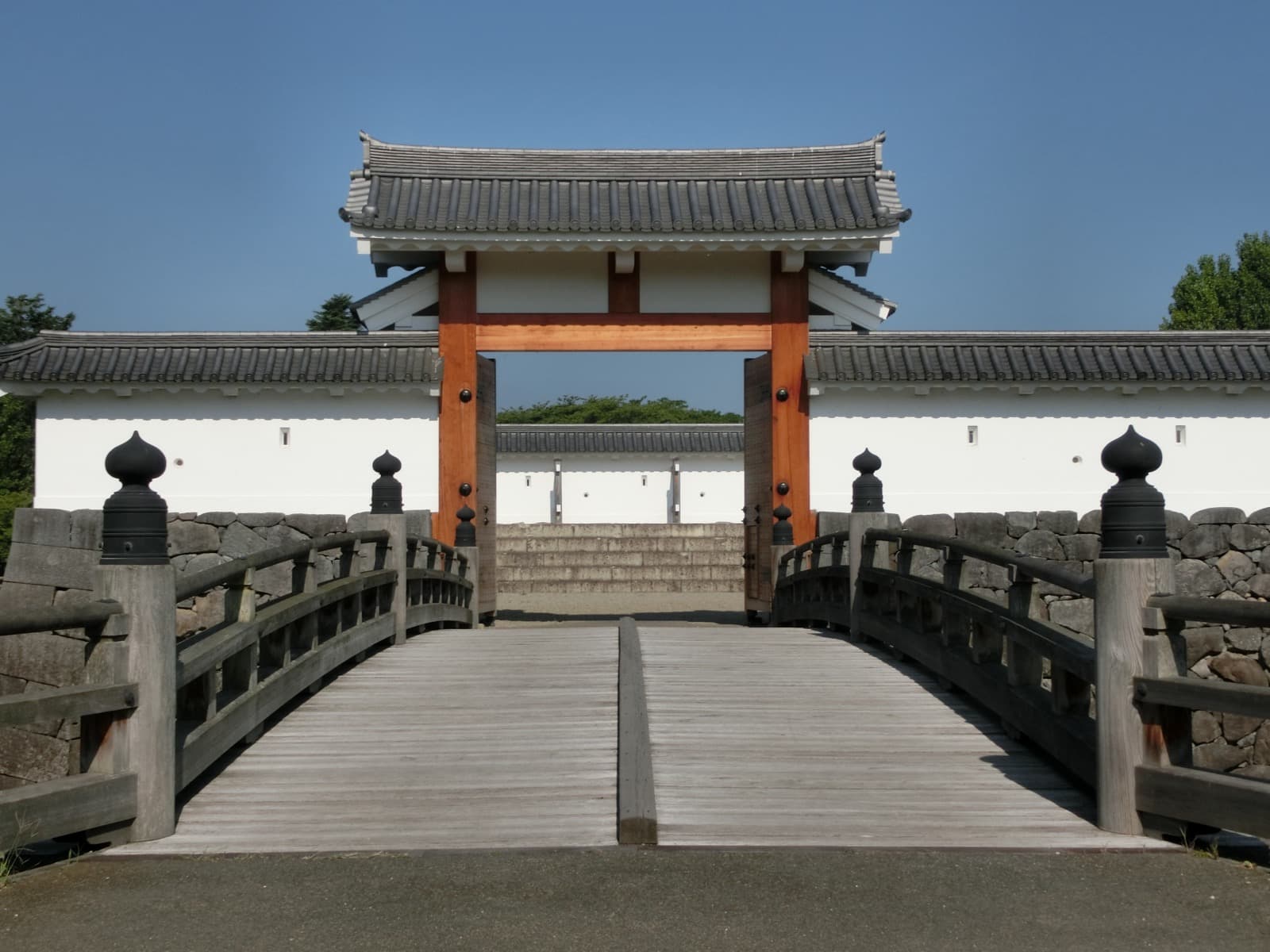
Yamagata Castle was founded in 1357 by an ancestor of the Mogami clan and rebuilt in 1592 by Mogami Yoshiaki; the National Historic Site that remains is now central Yamagata's park. The reconstructed Ninomaru Higashi Otemon gate (1991) is the set piece, with the Honmaru Ichimonji-mon gate area beyond it. Inside the grounds sit the Yamagata Museum of Art and the Mogami Yoshiaki Historical Museum, so you can put a biography to the clan whose walls you are standing on. Roughly 1,500 cherry trees make it a top hanami spot, and the gates open at 5:30 AM for anyone who wants them empty.
Getting there: About a 15-minute walk from Yamagata Station's East Exit to the Higashi Otemon gate. Park and castle grounds are free; the museums inside charge separately. Open 5:30 AM – 10:00 PM.

07Miyagi
Aoba Castle — Sendai Castle Ruins (Miyagi)
仙台城跡(青葉城跡)
Sendai is Date Masamune's city, and Aobayama hill is where he built its castle in 1601. The keep did not survive the 1945 bombing of Sendai; what is left is stone ramparts, a reconstructed turret, open parkland, a small museum, and Masamune's equestrian statue looking out over the city he founded — lit every night until 10 PM. Because the Zuihoden mausoleum takes the crowds, Aoba gets treated as a drive-by photo stop. That is a shame: the hill is where you understand why he put the city here.
Getting there: Take the Loople Sendai sightseeing bus from Sendai Station's west exit (~20 min) to the Sendai Castle Ruins stop, then walk 3 minutes. Castle grounds and park are free and open 24 hours; the Aoba Castle Museum charges ¥770 for adults (¥550 JHS–HS, ¥330 elementary).
08Miyagi
Osaki Hachimangu Shrine (Miyagi)
大崎八幡宮
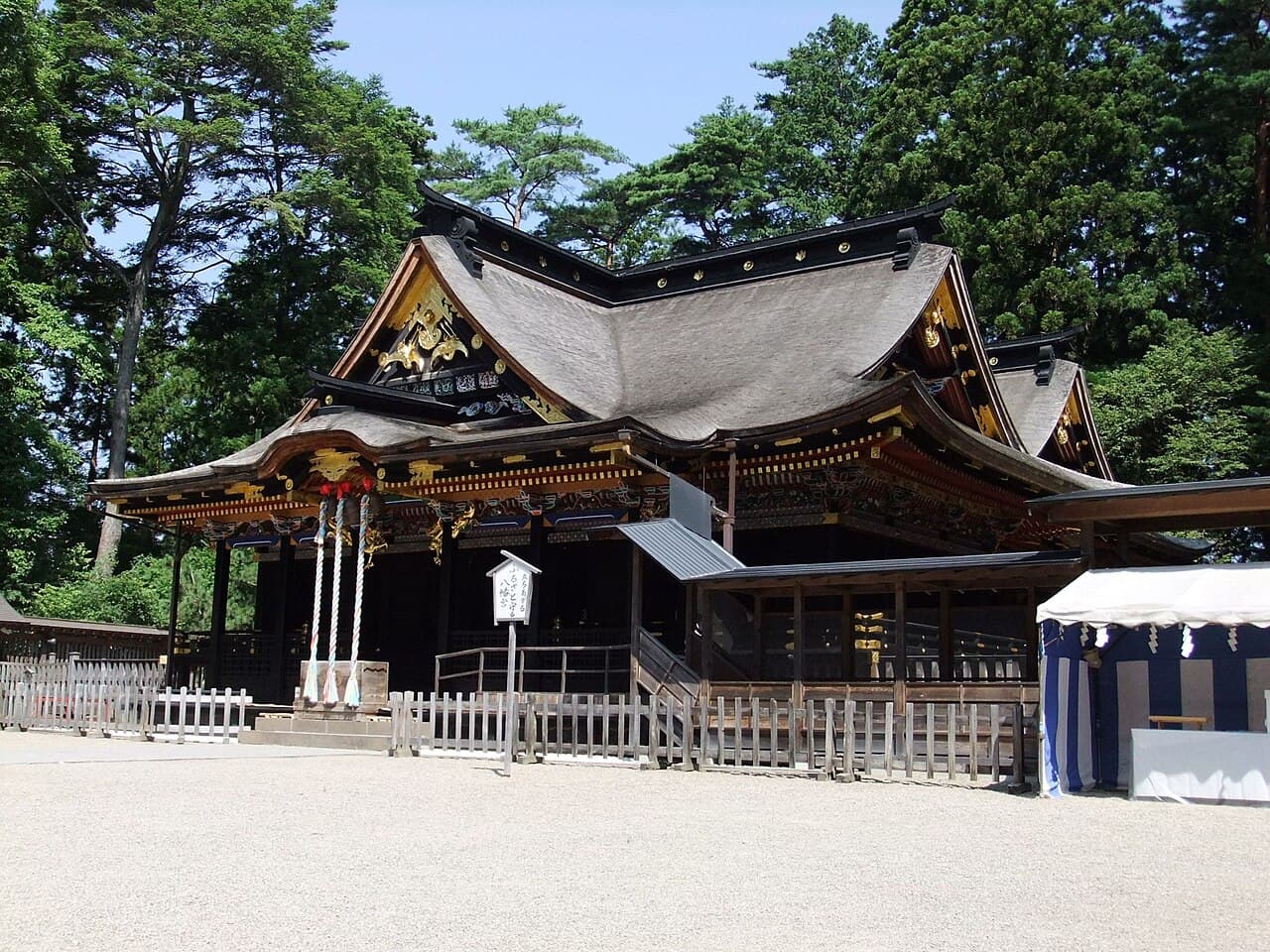
The other half of Masamune's Sendai. He ordered this shrine built between 1604 and 1607 to enshrine Hachiman, the Date clan's guardian deity — the god of war, tended by the family that ruled the north. The main hall is lavishly gilded and lacquered, a designated National Treasure, and one of the finest surviving examples of early-Edo gongen-zukuri architecture anywhere. It is the clearest statement of Date power still standing, and Sendai's visitors, having done the castle, almost never make the short trip west to see it.
Getting there: A short walk from Kokusai Center Station on the Tozai subway, or by bus from Sendai Station towards Hachiman-machi in Aoba Ward. Grounds open daily; the shrine office runs roughly 9:00–16:00.
09Fukushima
Tsuruga Castle, Aizu-Wakamatsu (Fukushima)
鶴ヶ城 (Aizuwakamatsu-jō)
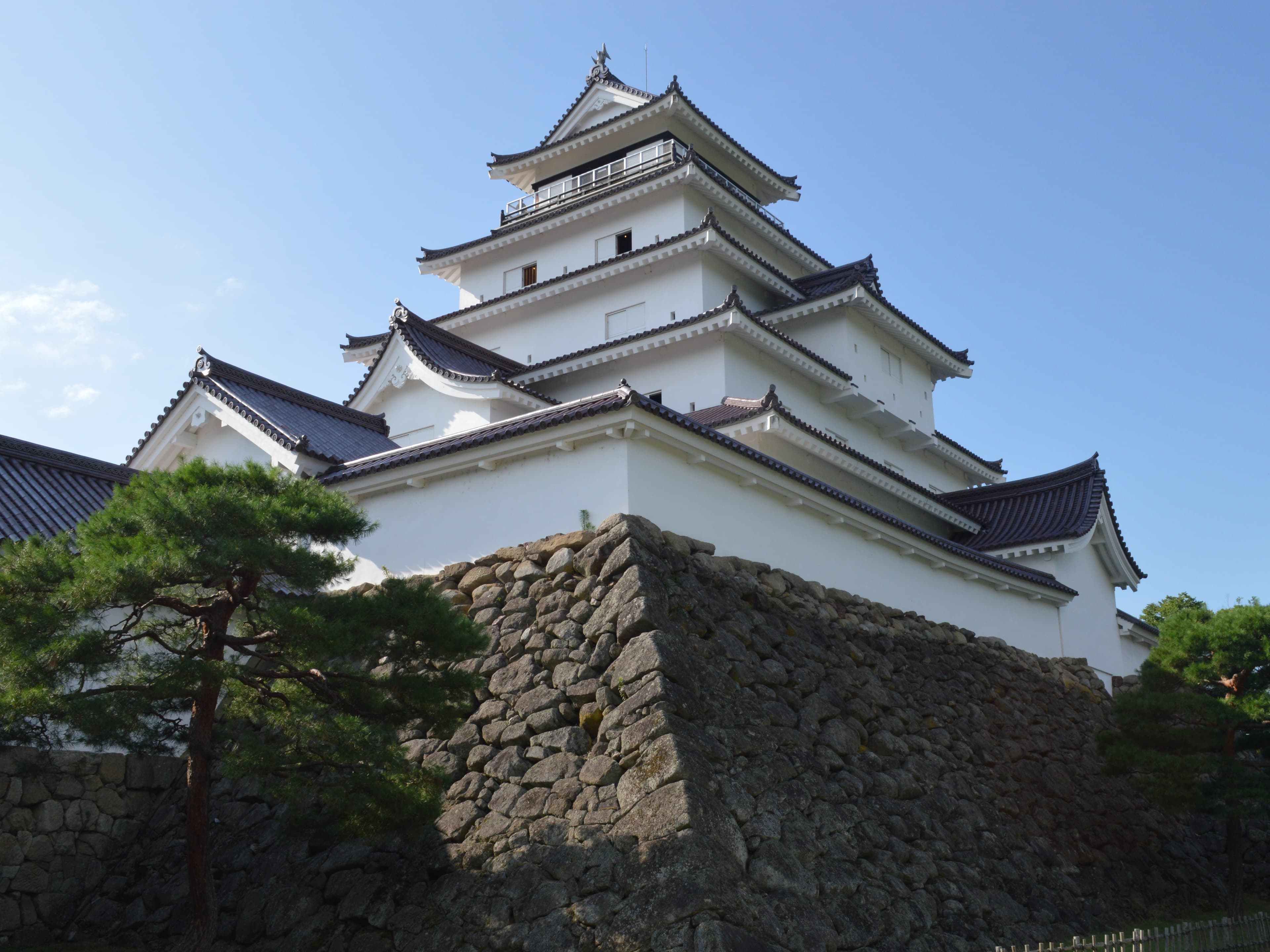
End where the samurai era did. Tsuruga Castle's keep was rebuilt in 1965 on its Edo-period foundations, and in 2011 its roof was re-tiled in red to match the original appearance — the only red-tiled castle roof in Japan, and a genuinely strange, beautiful thing to see against snow or autumn colour. This is the site of the 1868 Boshin War siege, the defeat that forged Aizu's samurai identity and still defines the town's sense of itself; nine of Aizu's annual events orbit these walls. Give it a slow afternoon, and pair it with the town rather than treating it as a stop.
Getting there: Take the Haikara-san loop bus from Aizuwakamatsu Station (JR Ban'etsu West Line) to the Tsurugajo Iriguchi stop, then walk 5 minutes; buses run every 30 minutes, ¥210 per ride or ¥600 for an all-day pass. Admission ¥410 for adults (high school and up), ¥150 for children; a combo ticket including the Rinkaku teahouse is ¥520. Open 8:30 AM – 5:00 PM daily.
Planning the route
The natural line is Hirosaki → Morioka → Akita → Kakunodate → Yokote → Yamagata → Sendai → Aizu-Wakamatsu, and it works on rails: the Tohoku and Akita Shinkansen do the long hops, local lines and loop buses the rest. Kakunodate is the anchor — on a weekend, base there and add Akita City and Yokote. With a week, run the full chain and give Sendai and Aizu-Wakamatsu two nights each: both have a castle and a town to walk.
Timing is the real decision. Late April is when Kakunodate's weeping cherries, Hirosaki's park, Kubota's 700 trees and Yamagata's 1,500 all fire at once — the region at its most beautiful and its most booked, so reserve early. October trades blossom for foliage over the same walls, with far fewer people and, at Yokote, a basin full of colour below the observation deck. Winter is harsh and quiet, but it is also when the north's most striking festivals happen; see Tohoku's winter festivals if the snow appeals rather than deters. In either shoulder season, walk early: these are hidden gems precisely because the crowds never arrive, and a bukeyashiki lane at 8 AM belongs entirely to you.
Related guides
- Japan's castle towns nobody visits — the national companion piece, from Kyushu to the San'in coast.
- Autumn in Tohoku: the north's quiet koyo — how the same six prefectures look in October, including the Hirosaki and Aizu castle parks.
- Tohoku's winter festivals — Yokote's Kamakura snow huts and the north's fire-and-lantern nights.
- Cherry blossoms off the beaten path — where to see sakura without the Ueno crush.
Ready to plan? Build your own hidden-Japan itinerary → — our trip generator turns any of these spots into a day-by-day route.