Tohoku7 min read
Autumn in Tohoku: The North's Quiet Koyo
A Tohoku autumn leaves itinerary through the north's quiet koyo: gorges, mountain onsen, castle parks and koyo valleys the tour buses skip.
Best time: Mid-Oct to mid-Nov
When most travellers picture autumn in Japan, they picture Kyoto — and by mid-November every famous temple garden there is a wall of tripods. Tohoku, Japan's deep north, is the antidote. Koyo (autumn foliage) arrives here first and lingers, rolling down from the high volcanic plateaus in mid-October to the castle-town moats by early November, and the six prefectures of Aomori, Akita, Iwate, Yamagata, Miyagi and Fukushima are stitched together by gorges, mountain onsen, sacred cedar staircases and scenic sky-roads that barely register on the mainstream map. This Tohoku autumn leaves itinerary follows the colour from north to south, matching the way koyo actually moves across the region, so you can build a route around quiet maples and golden beech instead of queueing for a photo. Nearly every stop below is a designated hidden gem — spectacular, and yours almost alone.
01Aomorihidden gem
Kurokuma Falls (Aomori)
くろくまの滝
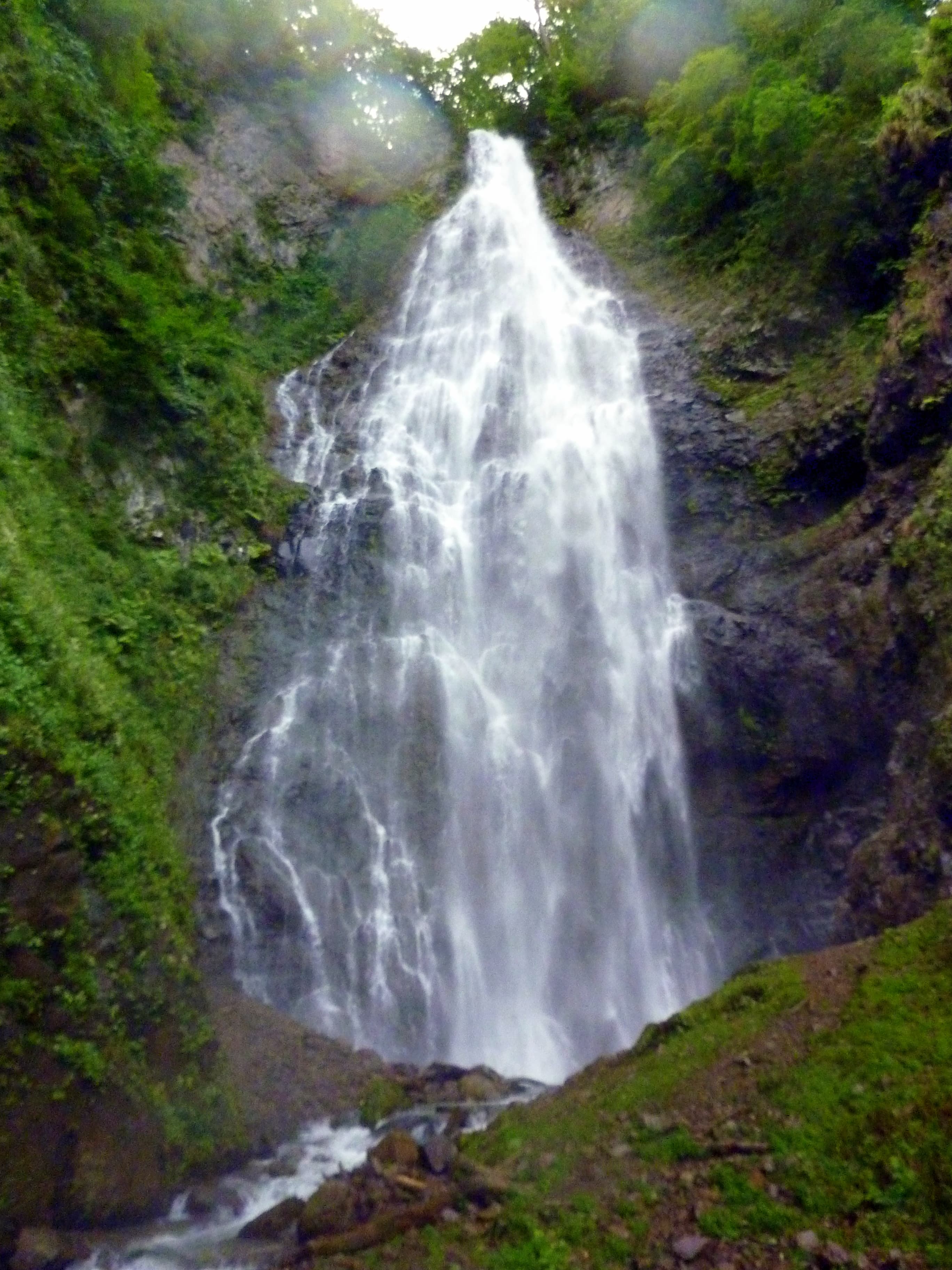
Tucked into the flanks of the World Heritage Shirakami Mountains, Kurokuma Falls is an 85-metre cascade whose slender, layered flow is said to resemble the figure of Kannon with hands clasped in prayer — it has been venerated as sacred for centuries and ranks among Japan's Top 100 Waterfalls. In autumn the surrounding beech forest turns gold and the short approach trail keeps foreign visitors away, overshadowed as it is by the more famous Shirakami-Sanchi core. It rewards travellers who want a quiet forest walk over a car-park viewpoint. Getting there: About a 30-minute drive inland from central Ajigasawa (nearest rail: JR Ajigasawa Station on the Gono Line), then a roughly 10-minute walk from the trailhead parking. The access road is typically closed in winter, so autumn is the tail end of the season.
Autumn Foliage Viewing — Hirosaki (Aomori)
Hirosaki Castle Park is the north's great koyo castle spectacle, and unlike its cherry-blossom fame, its autumn colours stay comparatively uncrowded. Vibrant red and gold leaves fill the grounds, and after dark the illuminated castle reflects in the west moat for one of Tohoku's most magical evening scenes. Come in the late afternoon to catch the sunset over the keep, then stay for the night illumination. Getting there: Nearest station is Chuohirosaki Station, a 17-minute walk; from Sendai Station it is about 4h 12m by car. Free. Foliage window runs Oct 31 – Nov 9, 2026 — arrive at the west moat for the best light.
Ani-Maeda Onsen Station (Akita)
This is Japan's first hot-spring bath built directly into a train station building, on the little-used Akita Nairiku Line at the foot of Mt. Moriyoshi. Operated as "Quince Moriyoshi," it offers a soak, meals and lodging right on the platform — and in autumn the mountain colours frame the ride in. Most travellers heading for Lake Tazawa or Nyuto Onsen never think to ride this third-sector line, which is exactly why it stays a secret. Getting there: About 50 minutes by the Akita Nairiku Line from Kakunodate; the onsen is built into Ani-Maeda Station itself, so you step from the platform to the bath.
02Iwatehidden gem
Hachimantai Plateau (Iwate)
八幡平
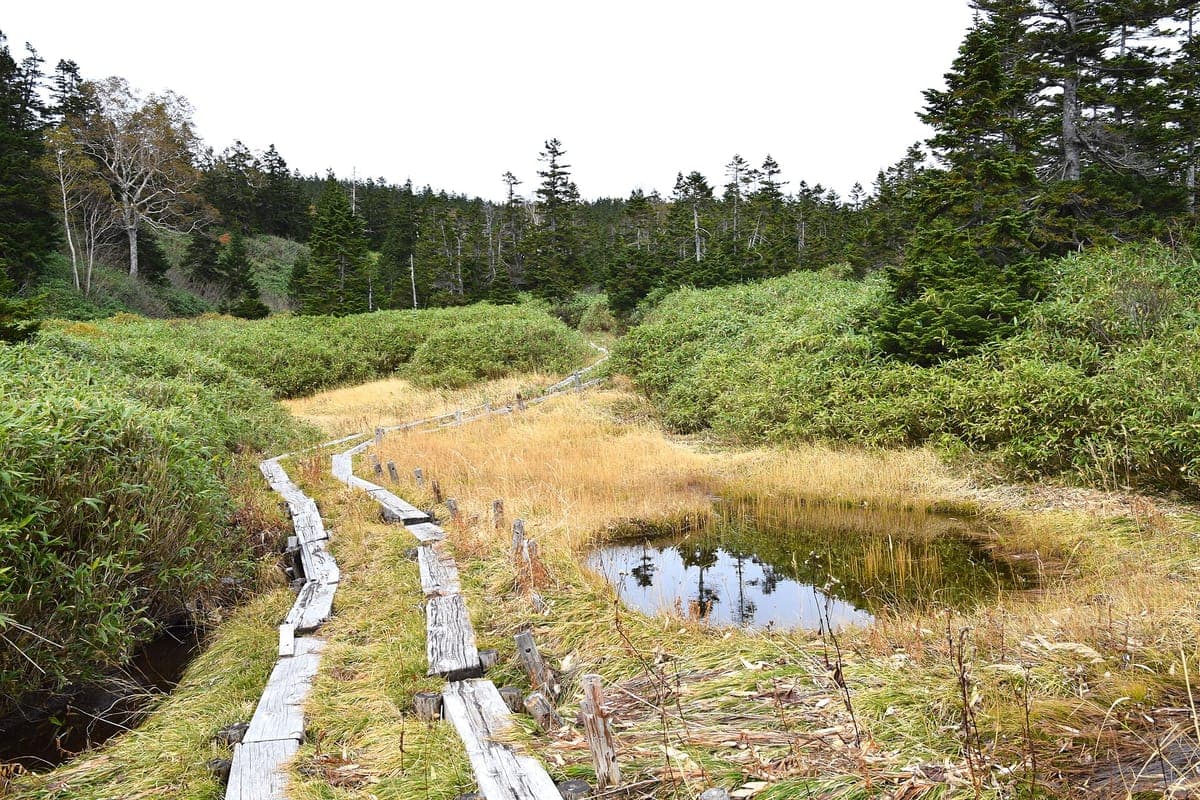
A stunning volcanic highland straddling the Iwate–Akita border, Hachimantai is best known for its "dragon-eye" lake, but its high, open terrain also means it catches koyo among the earliest in Tohoku. Boardwalk trails cross the plateau's marshland and volcanic scenery, and the elevation gives the beech and alpine grasses a long, staggered turn through October. Many travellers overlook it for busier spots, missing one of the north's most expansive autumn landscapes. Getting there: Nearest station is Ōbuke Station, a 6-minute walk; from Morioka Station, take the Iwate Galaxy Railway to Hachimantai Station, then a local bus to the plateau. From Sendai Station it is roughly 2h 34m by car.
03Yamagatahidden gem
Haguro Mountain (Yamagata)
羽黒山
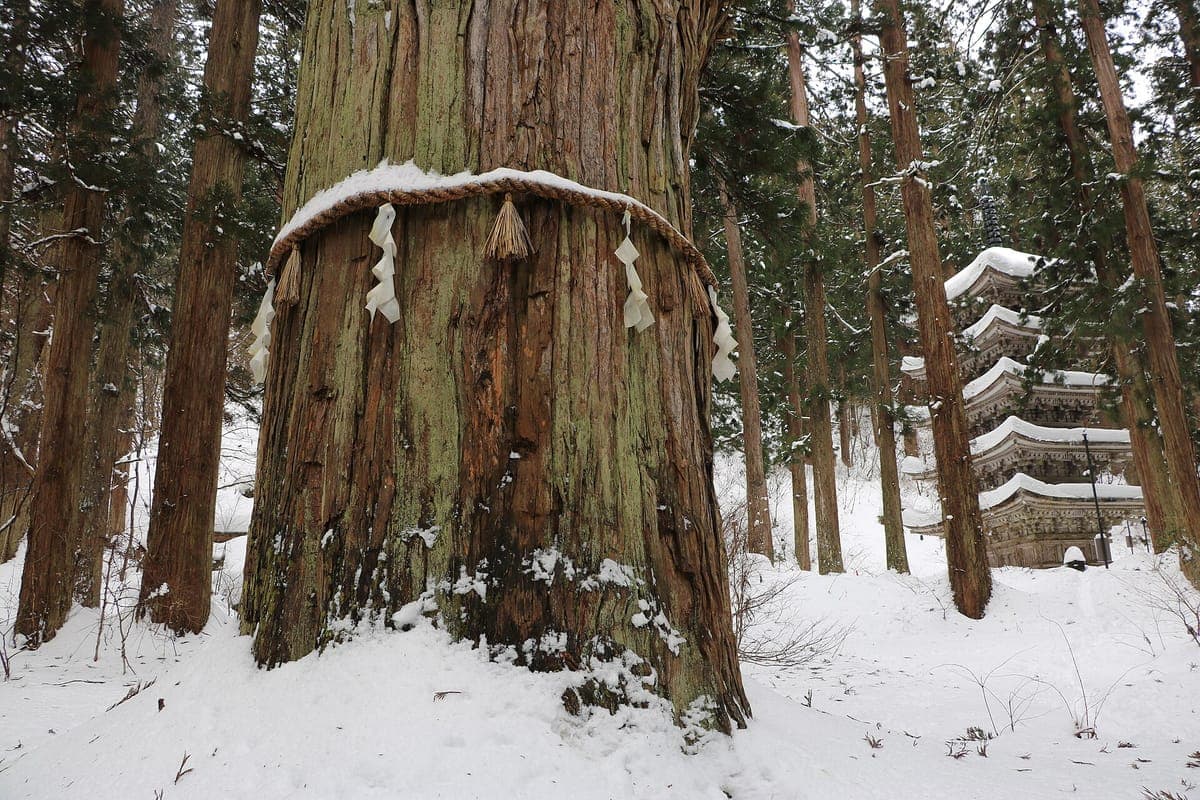
One of the Three Mountains of Dewa, Haguro-san is climbed by a path of 2,446 cedar-lined stone steps, and in autumn the light filtering through the ancient cedars — a scent like incense — makes the ascent feel like a pilgrimage through fire and gold. It is a rare blend of nature and living Shugendo spirituality, and most travellers chasing Mount Fuji never make the trip north. Autumn and its cool, clear weather are the ideal time to walk it. Getting there: Nearest rail is Tsuruoka Station (JR Uetsu Line); from there a Shonai Kotsu bus runs about 40 minutes to Haguro-sanroku / Zuishinmon at the base of the stone stairway. From Sendai Station it is about 2h 31m by car.
04Miyagihidden gem
Naruko Gorge (Miyagi)
鳴子峡
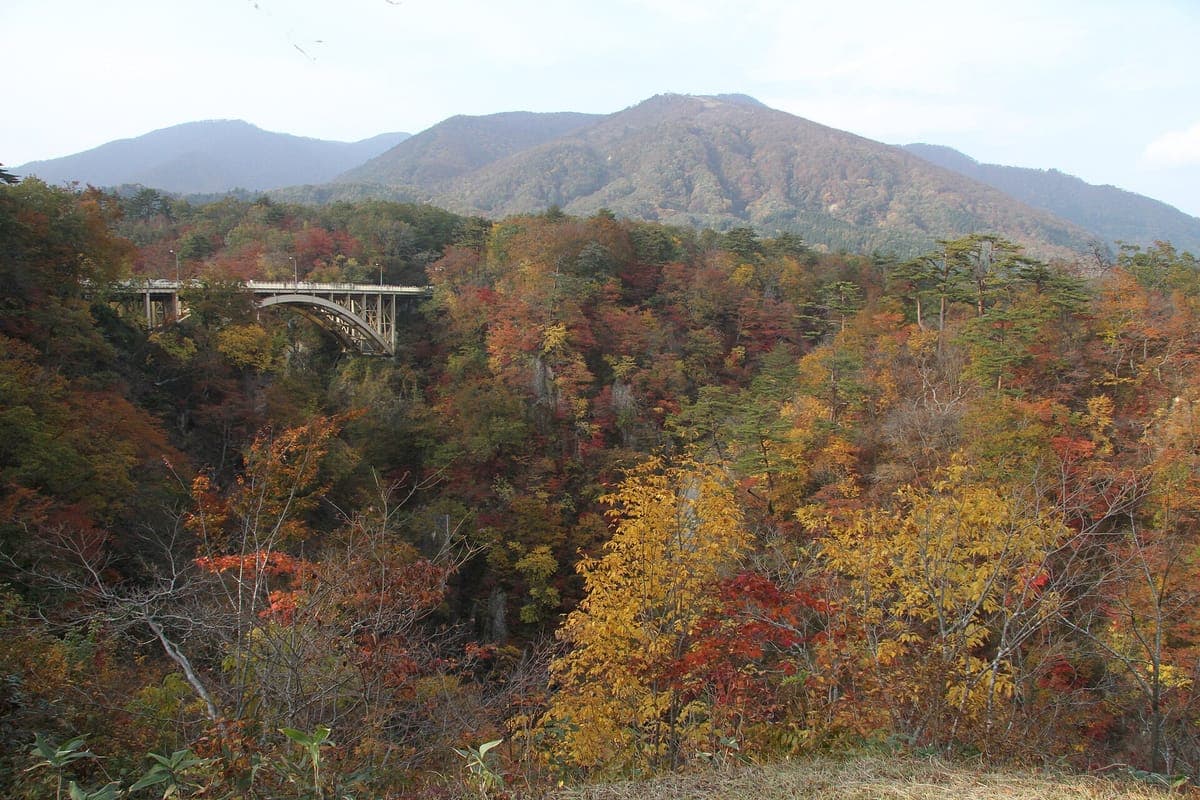
Naruko Gorge is Tohoku's postcard autumn ravine — a deep canyon where vibrant red maples overhang the walls and the iconic red bridge gives that classic framed view of colour and rock. It draws photographers and walkers alike, yet still slips under the radar of travellers who default to Nikko or Kyoto for their foliage. Pair it with a soak in the neighbouring Naruko Onsen and you have one of the region's best autumn day-loops. Getting there: Nearest station is Nakayamadairaonsen Station, a 28-minute walk; from Sendai Station it is about 1h 24m by car. Free (only the parking area may be charged in peak season).
05Miyagi
Sankai Falls & Takimidai Lookout (Miyagi)
三階滝・滝見台
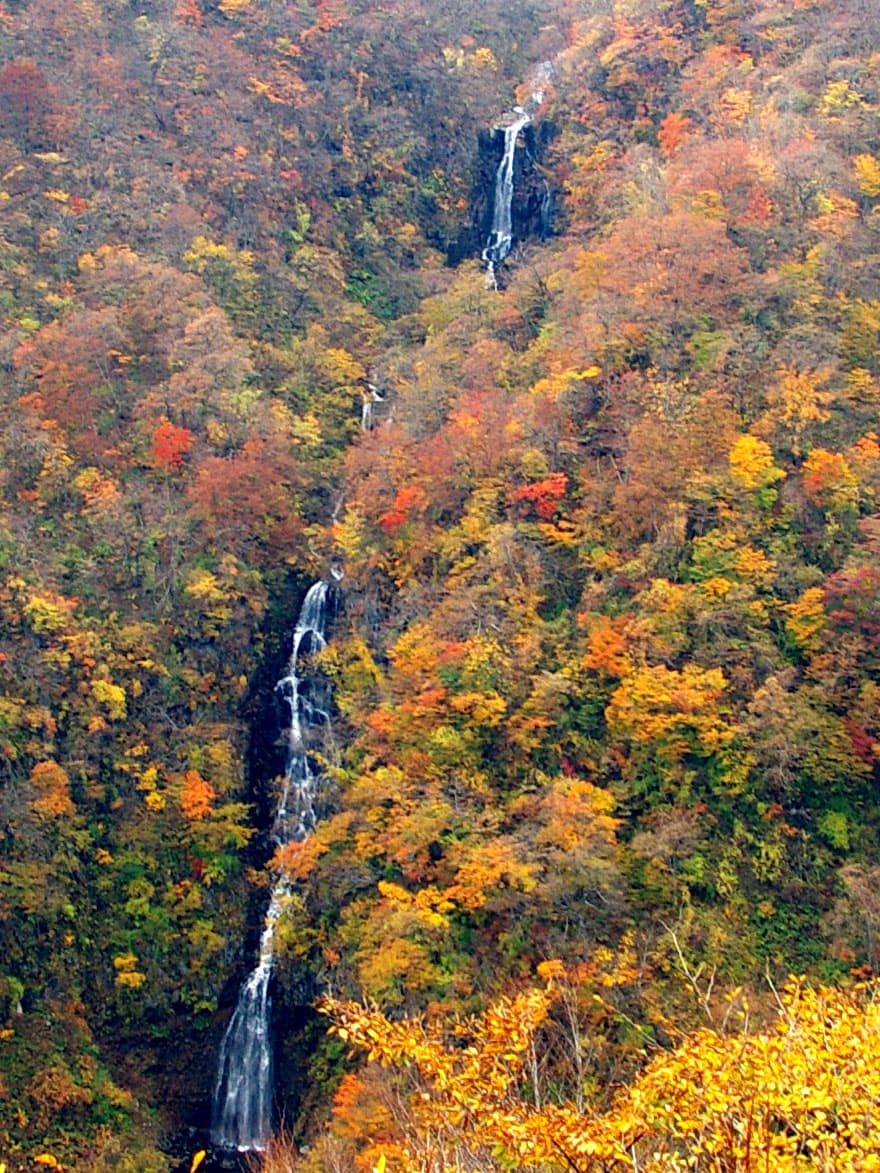
High on the Miyagi side of Mount Zao, the Takimidai observatory at 700 metres frames Sankai Falls — a 181-metre, three-tiered cascade on Japan's Top 100 list — together with the wide Fudo Falls across the valley. Most drivers speed straight past this easily-missed pull-off on their way to the famous Okama crater lake, which leaves the autumn panorama here almost private. In peak colour the whole slope below the lookout turns. Getting there: Along the Zao Echo Line (Route 12) above Togatta Onsen; watch for the 滝見台 sign and small parking lot on the Miyagi side. Your own car is strongly recommended, as no public buses stop here — and note the Echo Line road closes from roughly mid-November to late April, so autumn is your last window.
06Fukushimahidden gem
Bandai-Azuma Skyline (Fukushima)
磐梯吾妻スカイライン
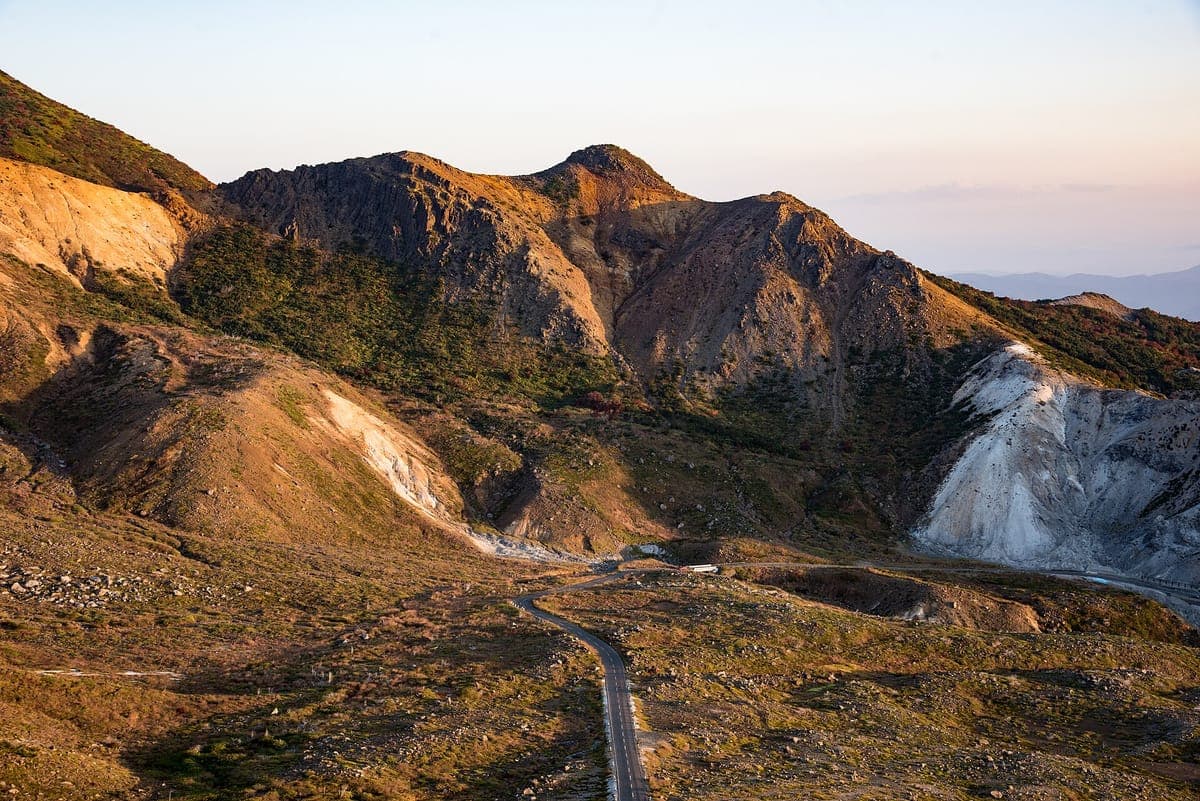
The Bandai-Azuma Skyline is a mountain sky-road with few equals for an autumn drive, threading past volcanic landscapes and, on a clear day, views over hundreds of small multicoloured ponds far below. The vivid foliage season is when the whole route comes alive, yet it stays quiet next to Japan's better-known scenic drives. Give yourself time to stop at the pull-outs rather than treating it as a through-route. Getting there: Accessible by car from Fukushima City, roughly a 30-minute drive to the road's start; from Sendai Station it is about 1h 49m by car.
Autumn Foliage Viewing — Aizu-Wakamatsu (Fukushima)
Aizu-Wakamatsu closes the route with a castle-park finale: the historic Tsuruga Castle, its white walls set against brilliant red and gold leaves, is one of the most photogenic autumn scenes in the south of Tohoku. The crisp air sharpens the colour, and the view from the castle's upper floors opens onto the whole coloured plain. Late afternoon brings the best light across the grounds. Getting there: Nearest station is Nanukamachi Station, a 22-minute walk; from Sendai Station it is about 2h 15m by car. Free. Foliage window runs Oct 10 – Oct 31, 2026.
When to go
Tohoku's koyo is a moving target that generally sweeps from north to south and from high ground to low over about a month. The high volcanic country — Hachimantai's plateau, the passes above Zao — colours earliest, from mid-October, which is also when the castle grounds at Aizu-Wakamatsu begin their turn (Oct 10 – Oct 31, 2026 in the data). The lower castle towns and moats hold their colour later: Hirosaki's foliage runs Oct 31 – Nov 9, 2026. In practice, a mid-October to mid-November trip lets you chase the peak downhill — start in the northern and higher spots, finish in the town parks — rather than arriving too early or too late anywhere. Mountain roads like the Zao Echo Line close for winter from roughly mid-November, so the season has a hard back edge; aim for the last week of October through the first week of November if you want the widest spread of colour open at once.
Keep exploring
- Autumn leaves off the beaten path — quiet koyo spots the whole length of Japan, from Hokkaido to Kyushu.
- Tohoku winter festivals — what the same six prefectures become once the snow arrives.
- Sacred Japan: Kumano, Koya & Dewa — go deeper on Haguro-san and the Three Mountains of Dewa.
- Tohoku's Samurai Towns — the same route, for the castles rather than the leaves.
Ready to plan? Build your own hidden-Japan itinerary → — our trip generator turns any of these spots into a day-by-day route.