Multi6 min read
Rainy-Season Japan: Hydrangea Temples & Mossy Gardens in the June Tsuyu
A Japan rainy season guide to hydrangea (ajisai) temples and moss gardens that shine in the June rains — from hidden Kyoto to Kyushu, Kanto and Tohoku.
Best time: Jun–early Jul (tsuyu)
Most travelers try to dodge the June rainy season, but a Japan rainy season built around hydrangea and moss temples turns the weather into the whole point. Tsuyu — the few weeks of soft, steady rain that settle over most of Japan from early June into July — is exactly when ajisai (hydrangea) blaze blue, violet and pink, and when moss gardens swell to their most luminous, saturated green. Petals hold raindrops; stone paths darken and gleam; crowds thin out. The spots below are chosen for wet weather, not in spite of it: quiet Kyoto nunneries carpeted in a dozen kinds of moss, a Kyushu Zen garden, a rock-gorge shrine reached by a mossy cedar avenue, and hydrangea festivals from Tokyo to Okayama to Aomori. Pack an umbrella, wear shoes that handle slick stone, and go early — the light after rain is the best you will get all year.
01Kyoto
Otagi Nenbutsu-ji
愛宕念仏寺
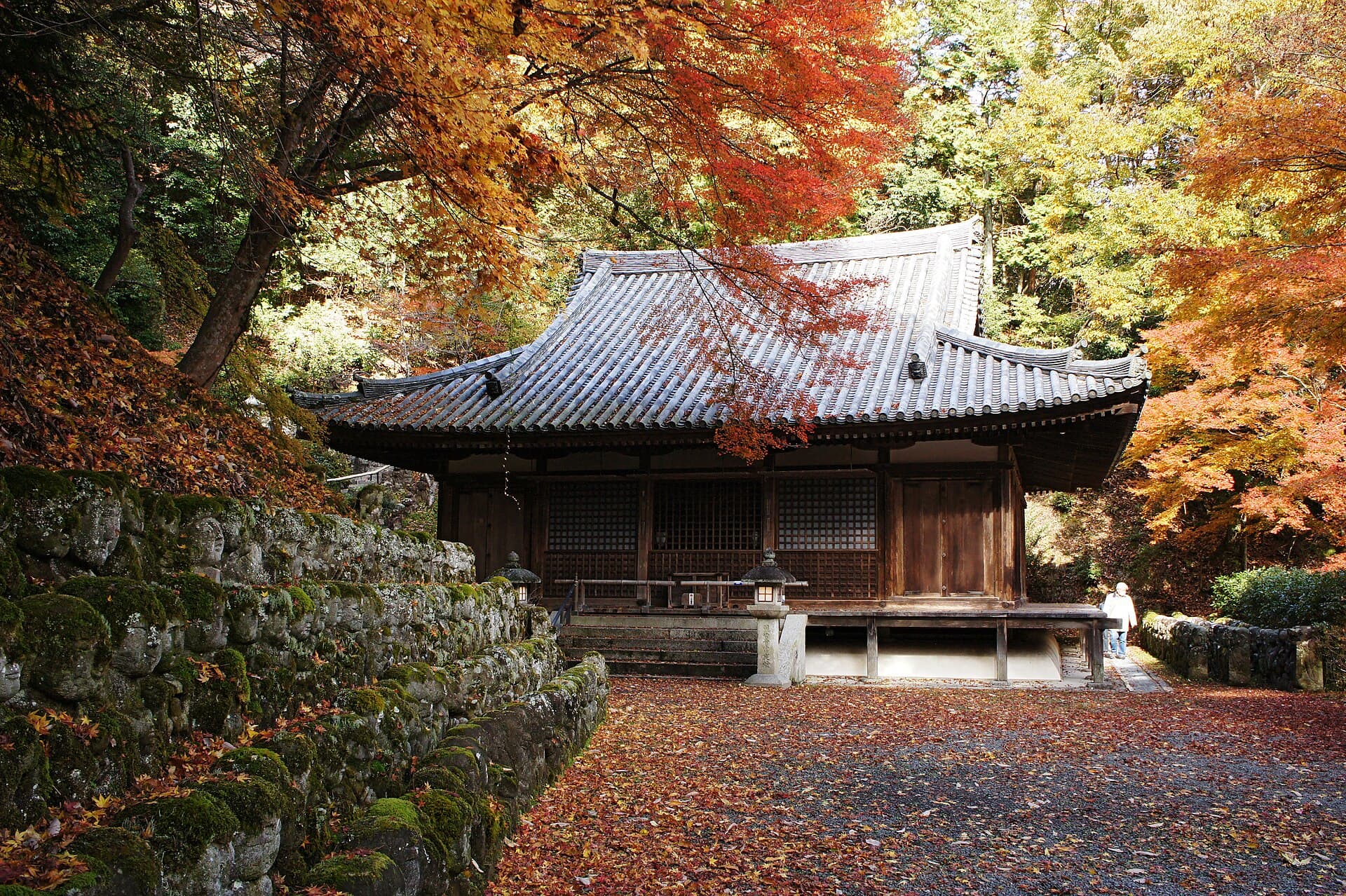
A hushed hillside temple at the far northwest edge of Sagano, famous for roughly 1,200 whimsical rakan (arhat) stone statues carved by amateur pilgrims between 1981 and 1991, each with its own expression. The moss that furs every figure and cap is at its most vivid in the June rainy season, when the whole slope turns emerald. Because it sits a steep 20-minute walk past Adashino Nenbutsu-ji, the Arashiyama bamboo-grove crowds almost never reach it. Getting there: Kyoto Bus 62/72/94 to "Otagidera-mae", or a ~20-min uphill walk from Adashino Nenbutsu-ji through the old Toriimoto street (nearest rail: JR Saga-Arashiyama). Admission ¥1,000. Closed Wednesdays and Saturdays.
02Kyoto
Gio-ji
祇王寺
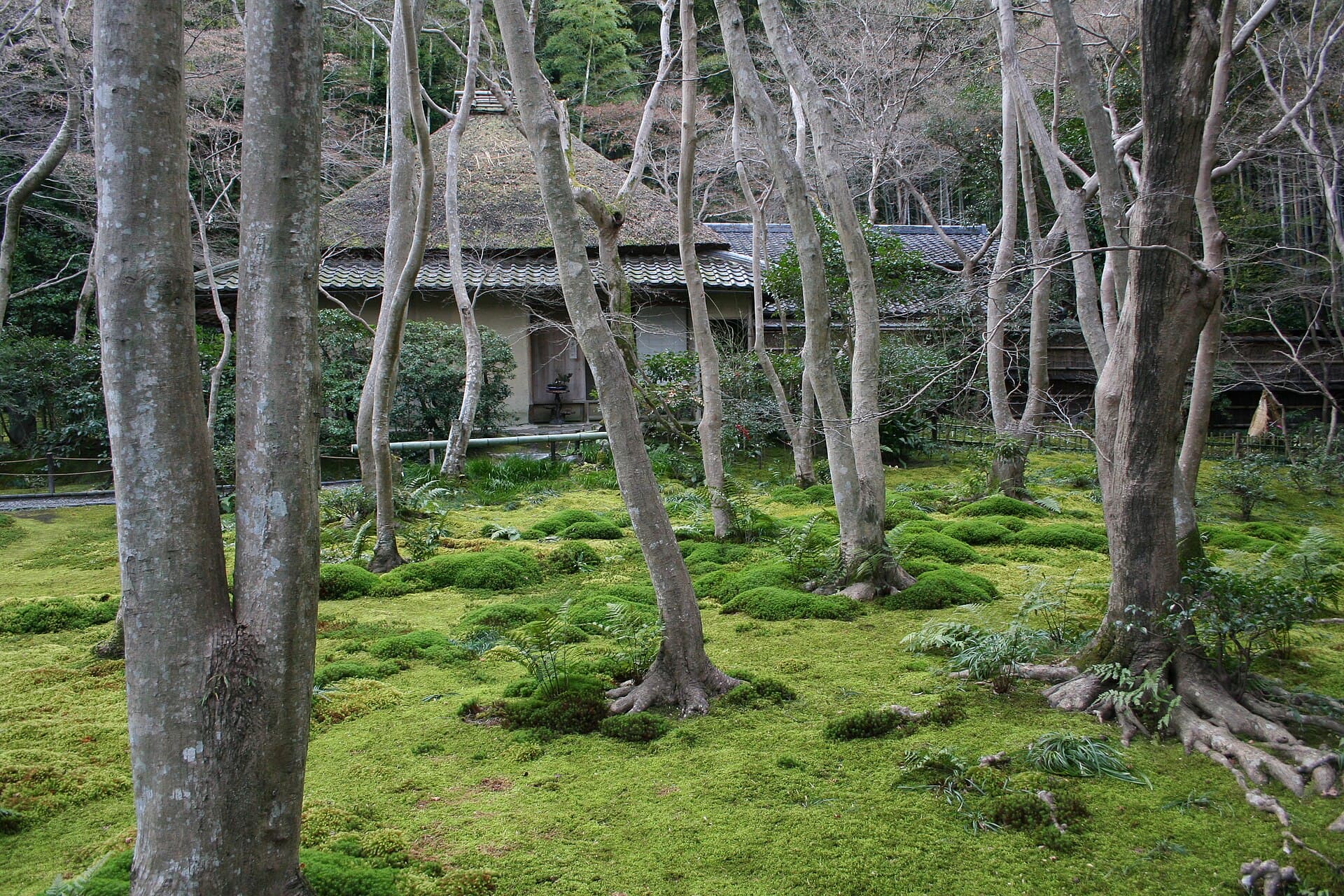
A tiny thatched-roof nunnery deep in Okuno-Sagano whose entire compact garden is carpeted in dozens of species of luminous moss beneath a maple canopy — and that moss is lushest in early summer, drinking in the tsuyu rain. It carries the melancholy of the Heike Monogatari: it is tied to Gio, a Shirabyoshi dancer cast aside by Taira no Kiyomori, who retreated here to become a nun. Overshadowed by the nearby bamboo grove and Tenryu-ji, it is a five-minute detour most visitors never make. Getting there: ~20-min walk into Okuno-Sagano from JR Saga-Arashiyama, or Kyoto Bus to "Saga-Shakado-mae". Admission ¥500.
03Kyoto
Sanzen-in Temple
三千院
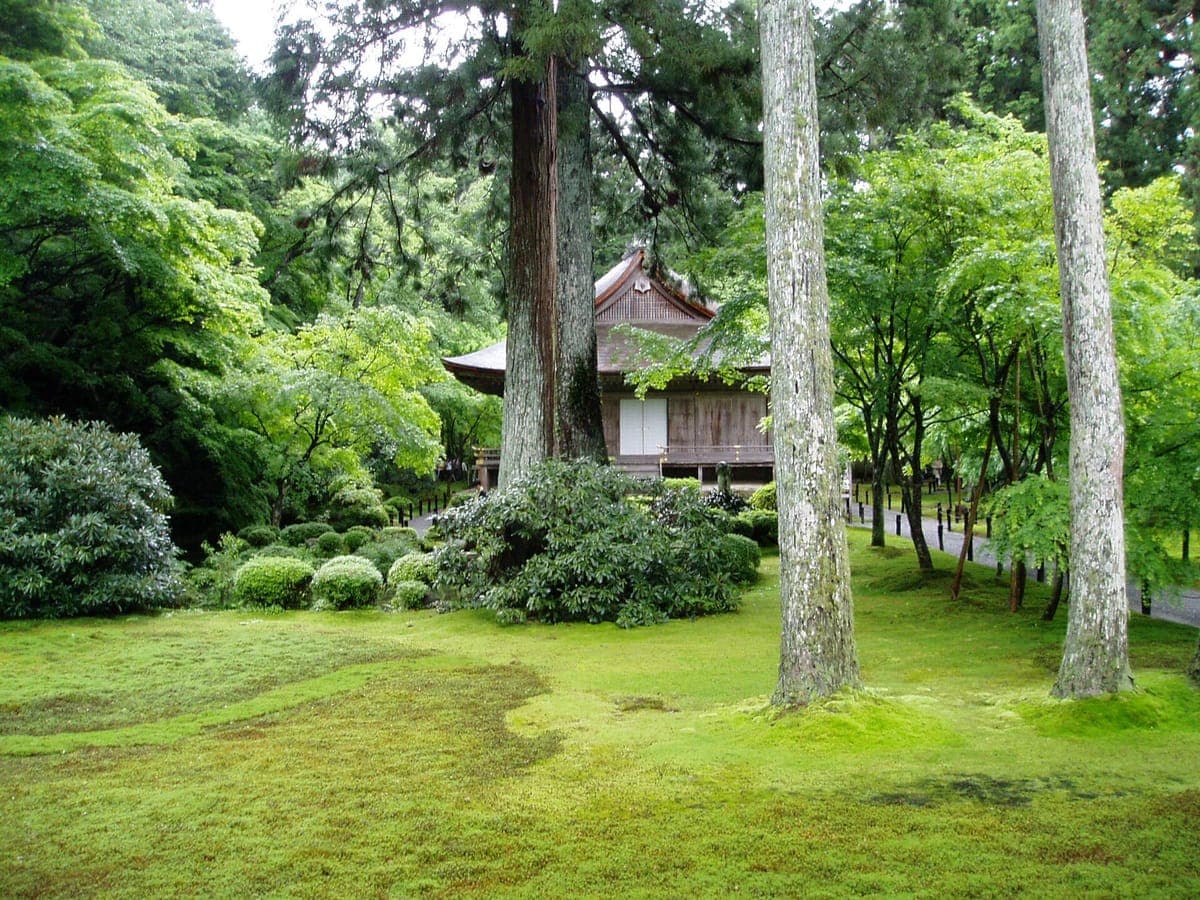
Up in the northern hill hamlet of Ohara, Sanzen-in is a venerable temple (founded 784 CE) whose gardens are known specifically for summer hydrangeas and autumn leaves — making June a quietly perfect time to come. Ancient cedars, moss underfoot and small stone Jizo figures give the grounds a stillness that the rain only deepens, and Ohara stays overlooked by travelers fixed on central Kyoto's headline temples. Getting there: Kyoto Bus to Ōhara, then a ~10-min walk (Ohara Bus Stop); or ~43 min by car from Kyoto Station. Admission ¥700. Open 9:00–17:00.
Hydrangea Season at Kyuan-ji Temple
An ajisaidera — a dedicated "hydrangea temple" — in the hills of Osaka Prefecture, Kyuan-ji draws visitors through late June as thousands of hydrangeas turn the grounds into a sea of blue, purple and pink. As the temple itself puts it, the rainy season is not a drawback but an enhancer: the damp makes the colors more vivid, and the earthy scent of wet soil and flowers hangs in the air. Come in the morning for softer light and fewer people, umbrella in hand. Getting there: Roughly 32 min by car from Shin-Osaka Station (nearest rail: Tsuzumigataki Station, a long walk out — a taxi or drive is easier). The hydrangea season runs 2027-06-15 to 2027-07-02; a temple admission applies.
Komyozenji Temple
A short walk from the crowds at Dazaifu Tenmangu, Komyozenji is a serene Zen temple founded in 1273, known for its moss garden, karesansui rock garden and quiet pond. Rain suits it: the moss glows, the raked gravel darkens, and the small viewing veranda becomes a place to simply sit and watch the drizzle. Most Dazaifu day-trippers walk straight past it. Getting there: Dazaifu Station · 4 min walk. Admission ¥200 for the garden. (Note: interior viewing has occasionally been suspended — the gardens remain the draw.)
04Gunma
Haruna Shrine
榛名神社
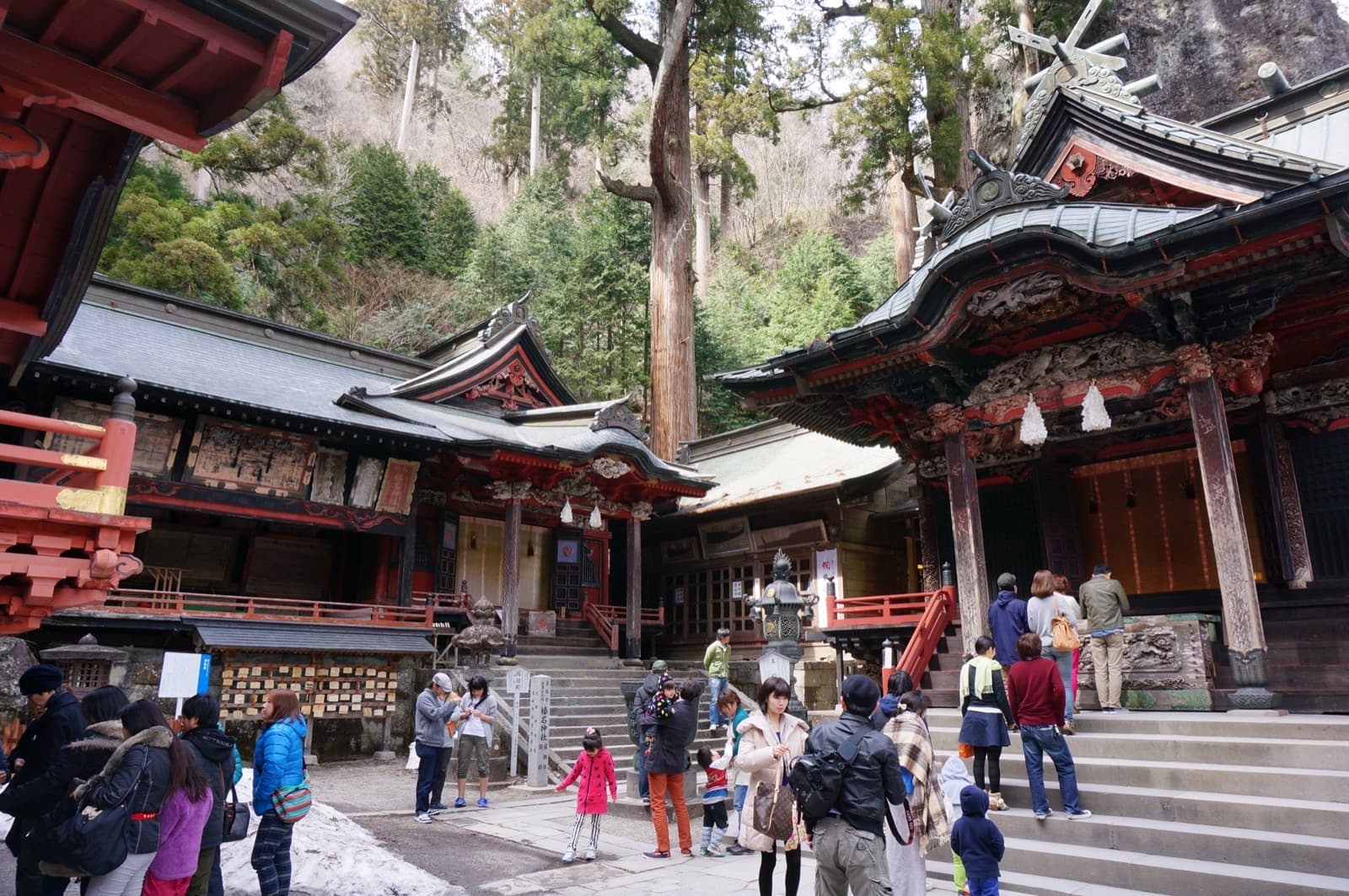
Founded in 586 CE on the slopes of Mt. Haruna in Gunma, this shrine is built directly into a dramatic rock gorge, its six Important Cultural Property structures reached along a mossy, cedar-lined approach that passes a natural rock gate and a waterfall. In the rain that cedar avenue is at its most atmospheric — dripping green, mist in the trees, the roar of water below. A famous domestic "power spot", it rarely surfaces in English-language coverage of Gunma. Getting there: ~70 min by Gunma Bus from Takasaki Station West Exit (bound for Lake Haruna), "Haruna Jinja" stop. Free admission; open 7:00–18:00 (17:00 in winter). Some buildings are under phased restoration through 2032 and may be scaffolded.
Hydrangea Season at Hakusan Shrine
One of Tokyo's best-loved ajisai spots, the Hakusan-jinja shrine transforms its grounds into a sea of hydrangeas each June, colors ranging from deep blue to soft pink, the air carrying that fresh, earthy after-rain scent. It is central, free and easy — a genuine hidden pocket of the rainy season inside the city. Visit early in the morning for the best light, fewer crowds and quieter photos; a weekday is quieter still. Getting there: Suidōbashi Station · 14 min walk. Free. The hydrangea display runs 2027-06-05 to 2027-06-13.
Hydrangea Viewing at Hondo-ji Temple
In Matsudo, just outside Tokyo, Hondo-ji pairs about 5,000 irises with some 50,000 hydrangeas in June, making it one of the most beautiful early-summer spots near the capital. Serene paths wind past traditional wooden halls and ponds that mirror the blooms — reflections that only improve when the surface is dimpled with rain. Go early to catch the flowers in soft light before the day-trippers arrive. Getting there: Kencho-Mae Station · 4 min walk. The iris-and-hydrangea season runs 2027-06-01 to 2027-06-30; a temple admission applies.
Kibitsu Shrine Hydrangea Festival
In late June the hydrangea garden (ajisai-en) along the historic 400m corridor of Kibitsu Shrine in Okayama City bursts into roughly 1,500 blooms in shades of blue, pink and purple — a tranquil early-summer counterpoint to the shrine's famous, sweeping architecture. Entry is free, and visitors can optionally enjoy matcha and traditional sweets among the flowers. Getting there: In Okayama City, at Kibitsu Shrine. Free. The festival runs 2027-06-12 to 2027-06-27.
Hydrangea Season at Takayama Inari Shrine
For hydrangeas in the deep north, the Takayama Inari-jinja shrine in Aomori Prefecture is known for its June blooms coloring the shrine grounds — a Tohoku counterpoint to the better-known temples further south, and a reminder that tsuyu arrives later and lighter up here. Its longer bloom window makes it a forgiving stop if your dates run into early July. Getting there: In Aomori Prefecture. Free. The hydrangea season runs 2027-06-20 to 2027-07-20.
When to go
Tsuyu typically settles over Honshu, Shikoku and Kyushu from early June and lingers into mid-July, and hydrangeas track it closely: the festivals here open around 2027-06-01 (Hondo-ji, near Tokyo) and 2027-06-05 (Hakusan Shrine), peak through the last two weeks of June (Kibitsu, 2027-06-12 to 2027-06-27; Hakusan closing 2027-06-13), and stretch into early July at the ajisaidera Kyuan-ji (through 2027-07-02). The far north runs latest — Aomori's Takayama Inari holds bloom from 2027-06-20 all the way to 2027-07-20. Moss gardens have no fixed festival: they are simply at their greenest and most saturated while the rain keeps falling, so the same weeks that suit hydrangeas suit Kyoto's Otagi Nenbutsu-ji, Gio-ji and Sanzen-in too. Mornings after overnight rain give you the richest color and the fewest people.
Keep exploring
- Kansai Beyond Kyoto & the Kii Peninsula — more quiet temples and gardens within easy reach of the moss spots above.
- Kanto Day Trips Without the Crowds — pair the Tokyo-area hydrangea shrines with an escape from the city.
- Autumn Leaves Off the Beaten Path — many of these same temples turn crimson a few months later.
- Off-Season Japan — the wider case for June — and for February.
Ready to plan? Build your own hidden-Japan itinerary → — our trip generator turns any of these spots into a day-by-day route.